Unleashing Power: A K&N Cold Air Intake Review for the Ford F-150 5.4 Triton
For years, I’ve heard the buzz about cold air intakes (CAI) and their promise of enhanced vehicle performance. Yet, despite my interest, I’d never taken the leap to install one on any of my vehicles – until now. My quest for a noticeable power boost and improved throttle response in my trusty 2008 Ford F-150 led me down the path of aftermarket upgrades, specifically to explore whether a K&N cold air intake could deliver the desired results.
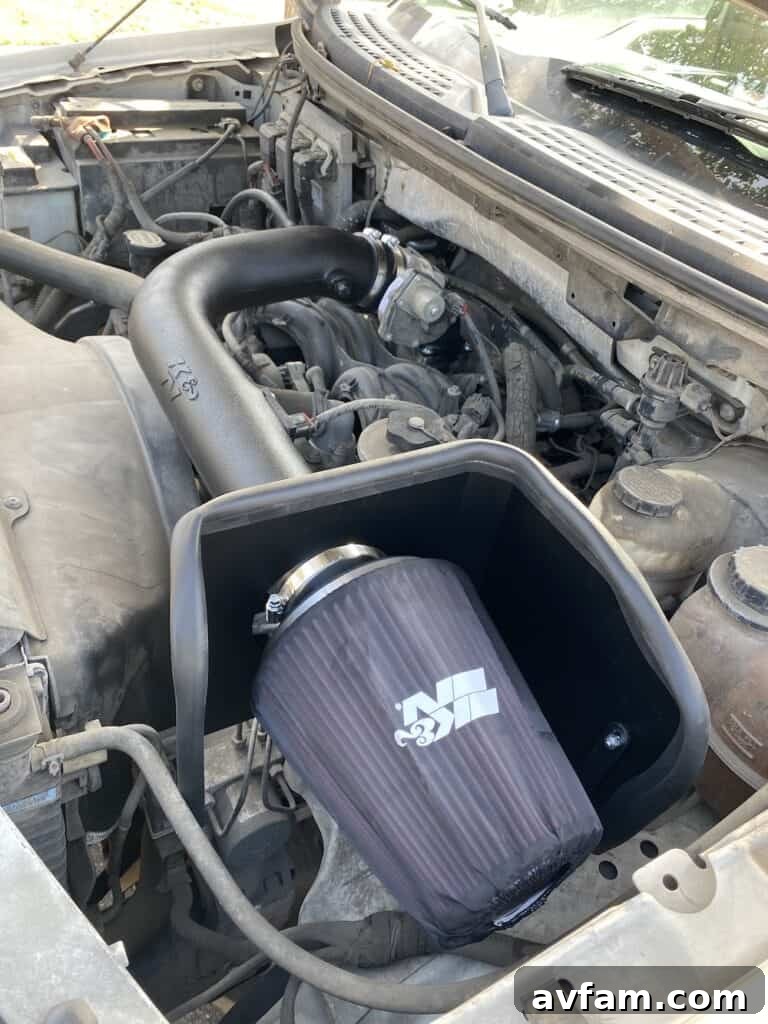
My F-150, powered by the robust 5.4 Triton V8 engine, has reliably served me through 165,000 miles. It’s a workhorse that’s been meticulously maintained with regular oil changes and scheduled servicing, never used for heavy towing. While the big V8 offers ample power for daily driving, I’ve always yearned for a little more under the hood – that extra punch when accelerating or merging. The only modification made previously was replacing the stock muffler with a Flowmaster Delta 50, which undeniably improved the exhaust note, but offered no discernible power gains. With the K&N intake, however, I felt an immediate and undeniable difference.
Understanding the Cold Air Intake Advantage
The principle is simple: an engine that breathes better performs better. This automotive adage holds true, and it’s where the cold air intake shines. Most factory air intake systems, particularly on naturally aspirated trucks like my F-150, prioritize quiet operation and emissions compliance. They typically feature large, restrictive plastic air boxes designed to muffle engine sounds and meet specific mileage standards, often at the expense of optimal engine performance. These stock systems can restrict airflow and draw in warmer air from under the hood, diminishing combustion efficiency.
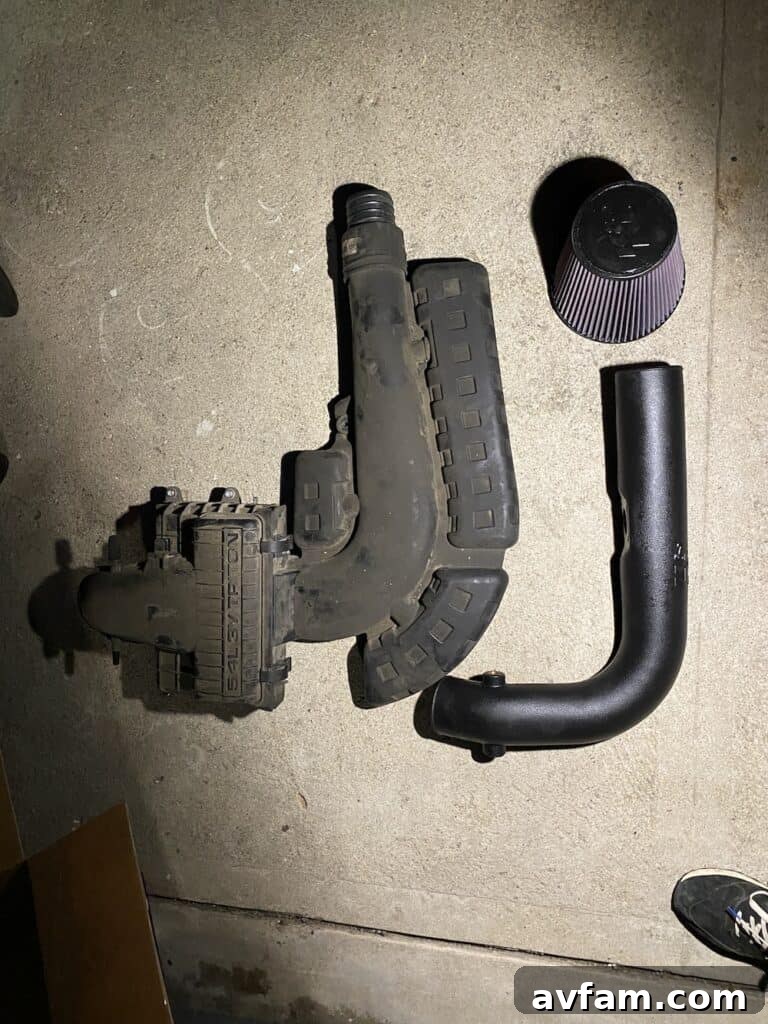
Here’s a clear illustration of the bulky, restrictive factory intake box dominating my F-150’s engine bay:
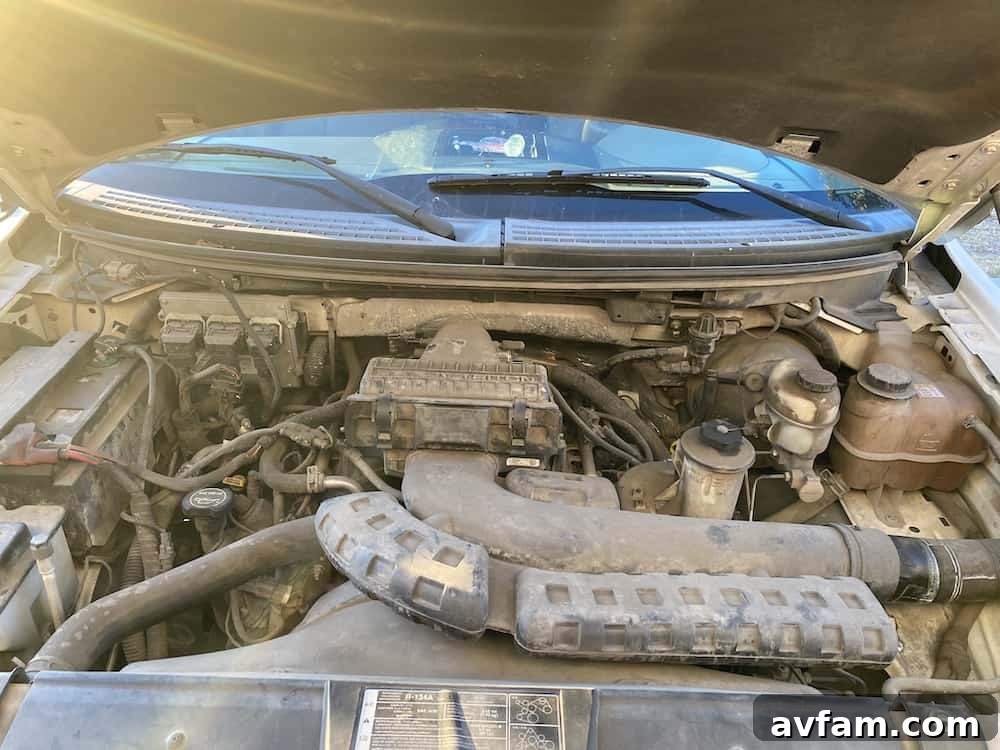
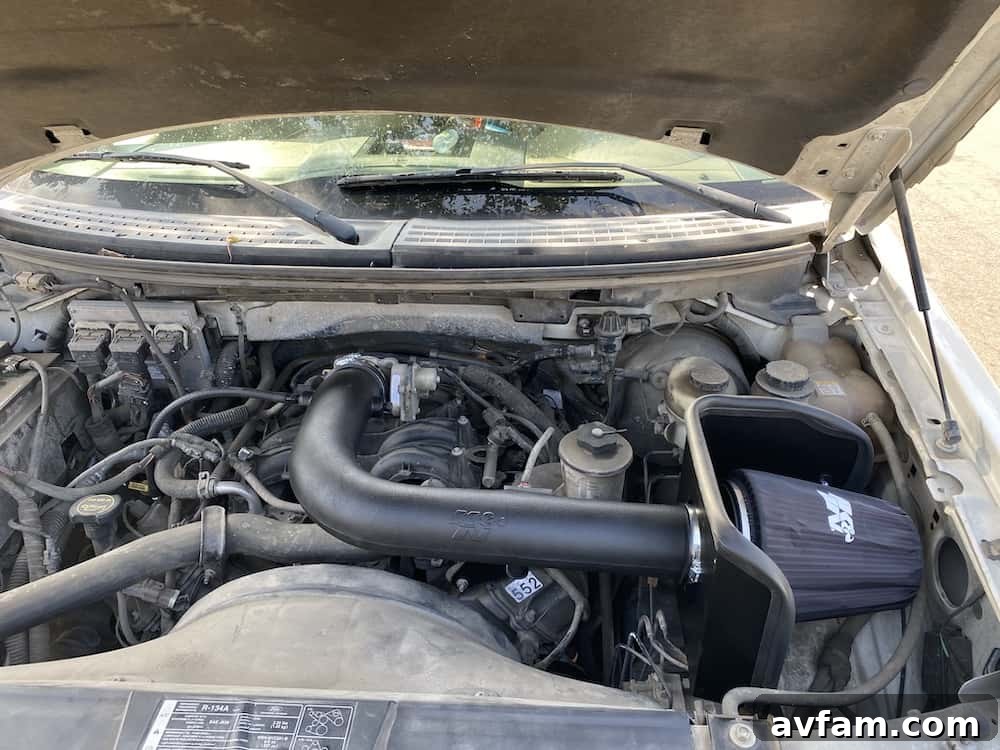
A cold air intake system fundamentally replaces this design with a more efficient setup. It typically features a shorter, wider diameter intake tube and an exposed, high-flow air filter, often strategically positioned to draw in cooler, denser air from outside the engine compartment. Imagine your engine wearing a restrictive mask, and now you’ve taken it off, allowing it to take deep, unobstructed breaths. This cooler, denser air contains more oxygen, leading to more complete combustion and, consequently, increased horsepower and torque.
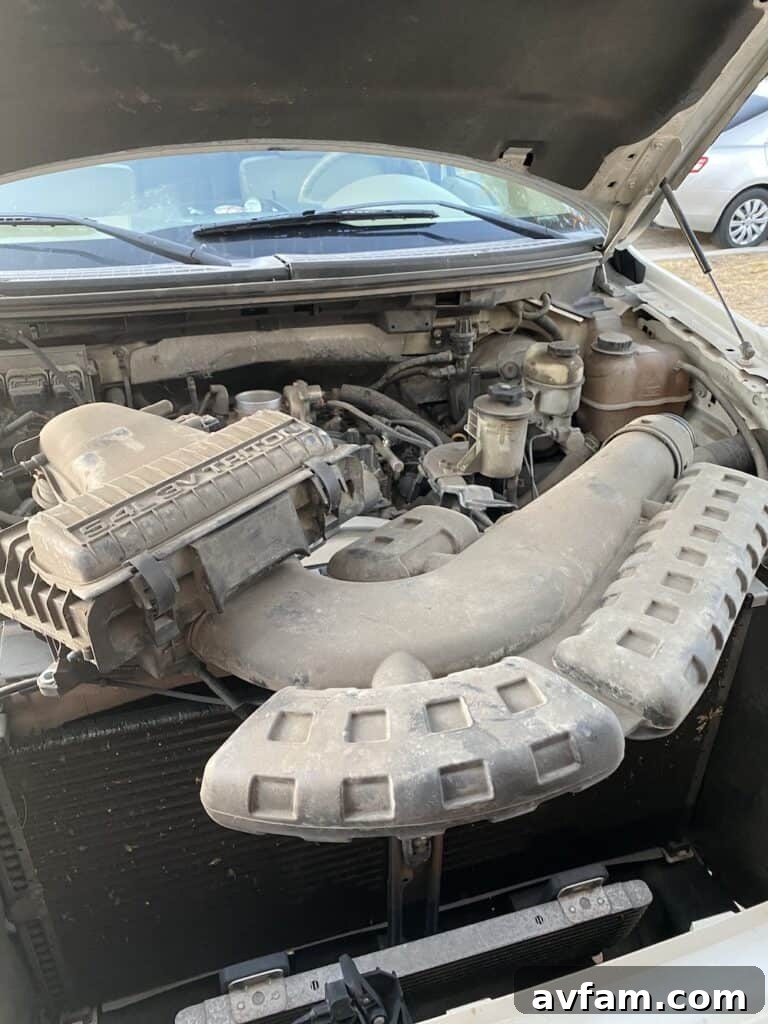
Beyond the immediate horsepower gains, improved engine airflow can offer several long-term benefits. Better breathing can lead to enhanced fuel efficiency, as the engine doesn’t have to work as hard to draw in air. Moreover, by reducing the strain on the engine and promoting cleaner combustion, a quality cold air intake can potentially contribute to a longer engine life. It’s a holistic upgrade that benefits multiple aspects of your vehicle’s operation.
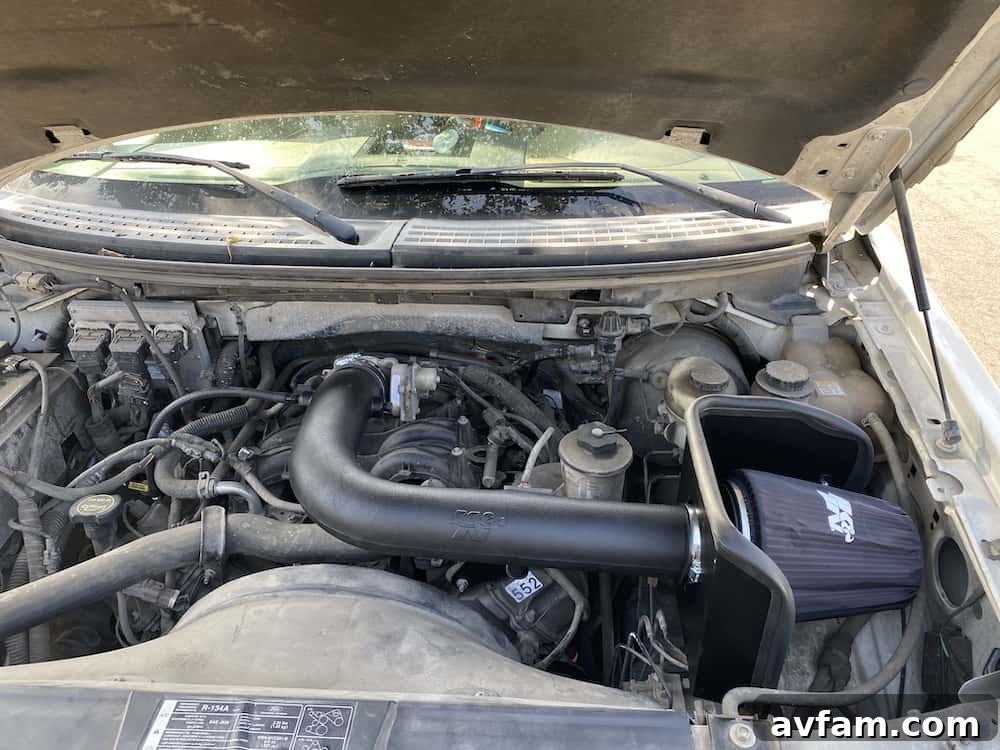
Compare the streamlined K&N cold air intake with the factory setup. The difference in size and design is immediately apparent:
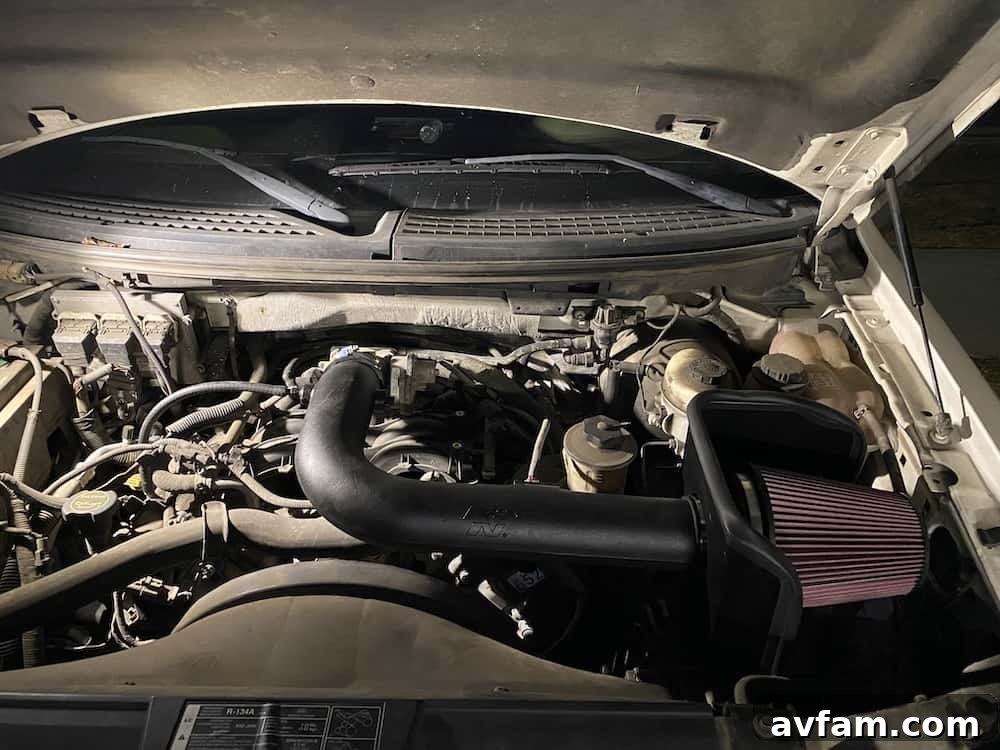
One common concern, or perhaps a unique benefit for some, is the increased engine noise. Because the restrictive factory air intake baffle is removed, your engine’s natural induction sound becomes more pronounced. For me, the satisfying whir and growl of the intake under acceleration is a welcome auditory cue of the engine working harder and more efficiently. However, those seeking a whisper-quiet ride might find this trade-off less appealing. Personally, I consider it a happy and engaging compromise for the performance gains.
Why Choose a K&N Cold Air Intake?
K&N is a household name in the performance aftermarket, renowned for its commitment to engineering excellence and durable products. Their cold air intake systems are meticulously designed to replace restrictive factory air filters and air intake housings. By utilizing a high-flow, reusable air filter and a precisely engineered intake tube, K&N systems significantly reduce airflow restriction. This allows the engine to inhale a greater volume of air, which translates directly to more power and torque. Their filters are also known for their long service intervals, typically lasting up to 100,000 miles before requiring cleaning, offering a cost-effective and environmentally friendly alternative to disposable paper filters.
K&N Cold Air Intake Installation Guide: A DIY-Friendly Upgrade
Installing a K&N cold air intake might seem daunting to some, but it’s genuinely a straightforward DIY project that most enthusiasts can tackle with basic tools. The process typically involves removing the factory air box and intake tube, then fitting the new K&N components. This hands-on experience not only saves on labor costs but also provides a deeper understanding of your vehicle’s mechanics.
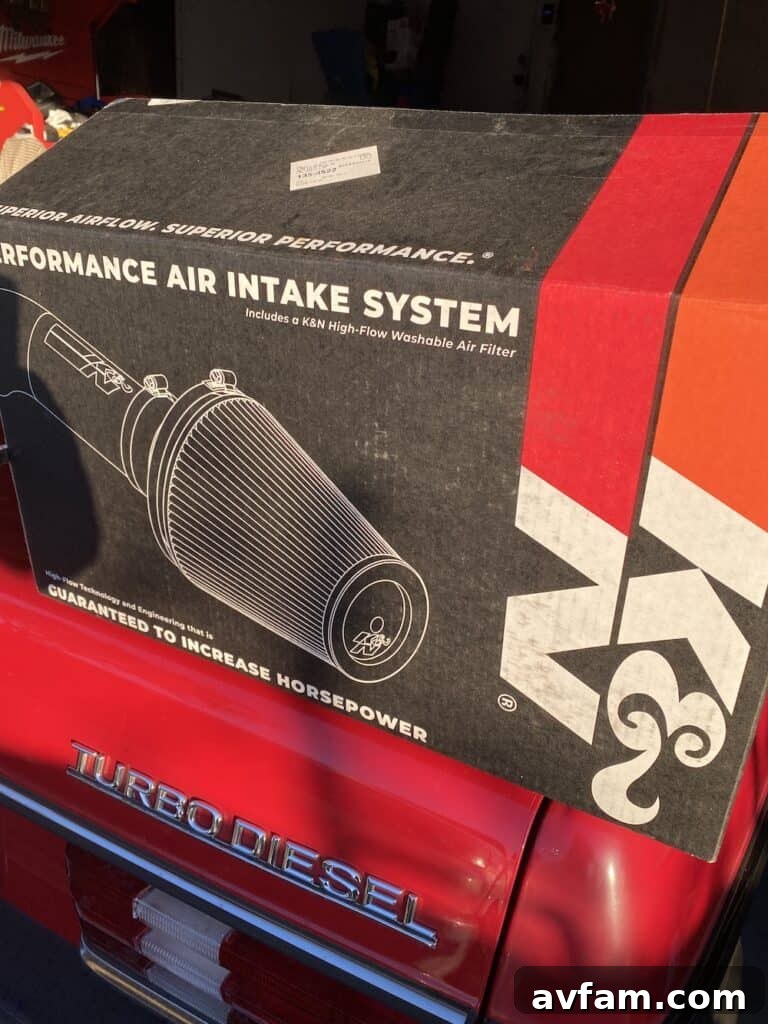
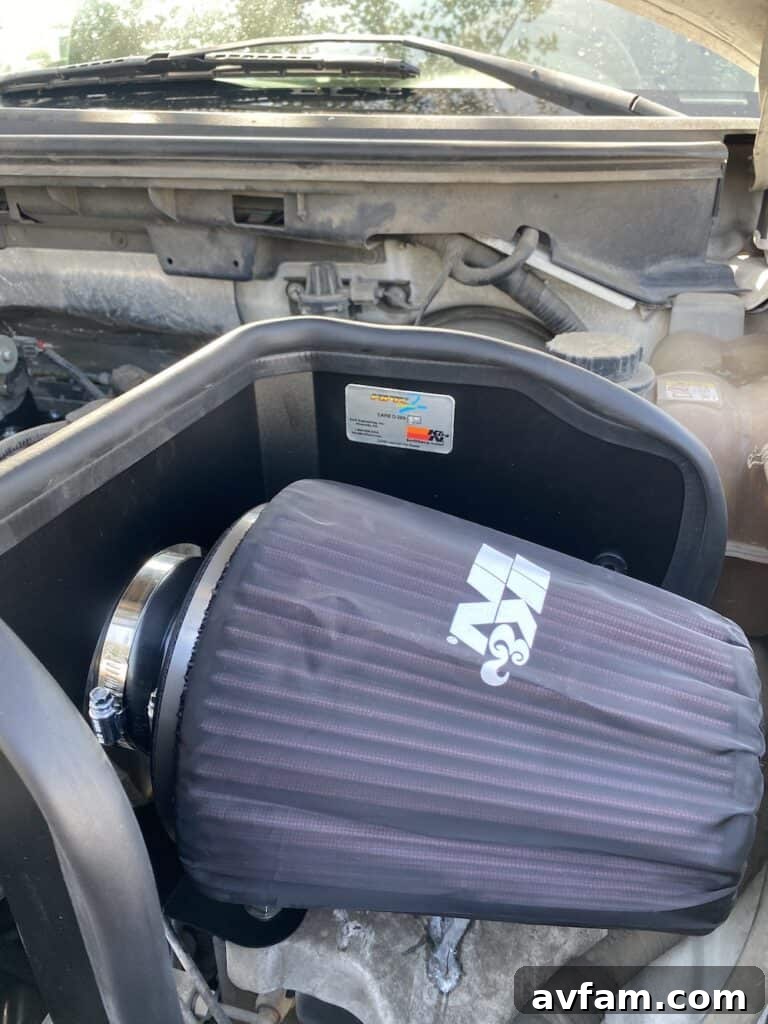
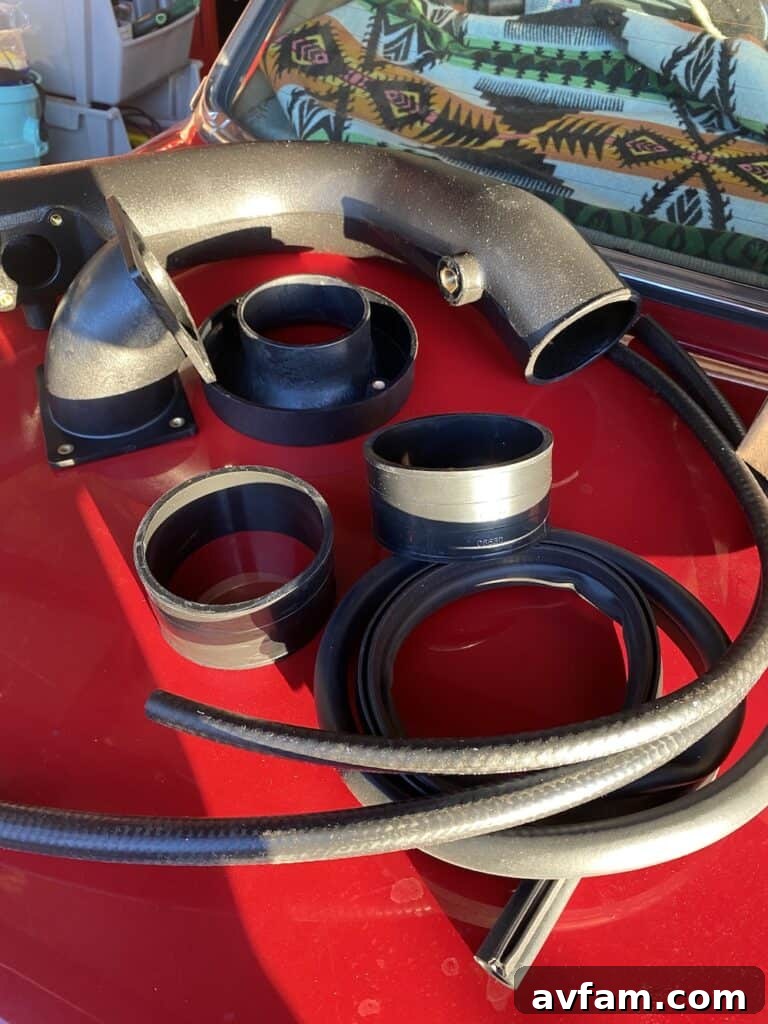
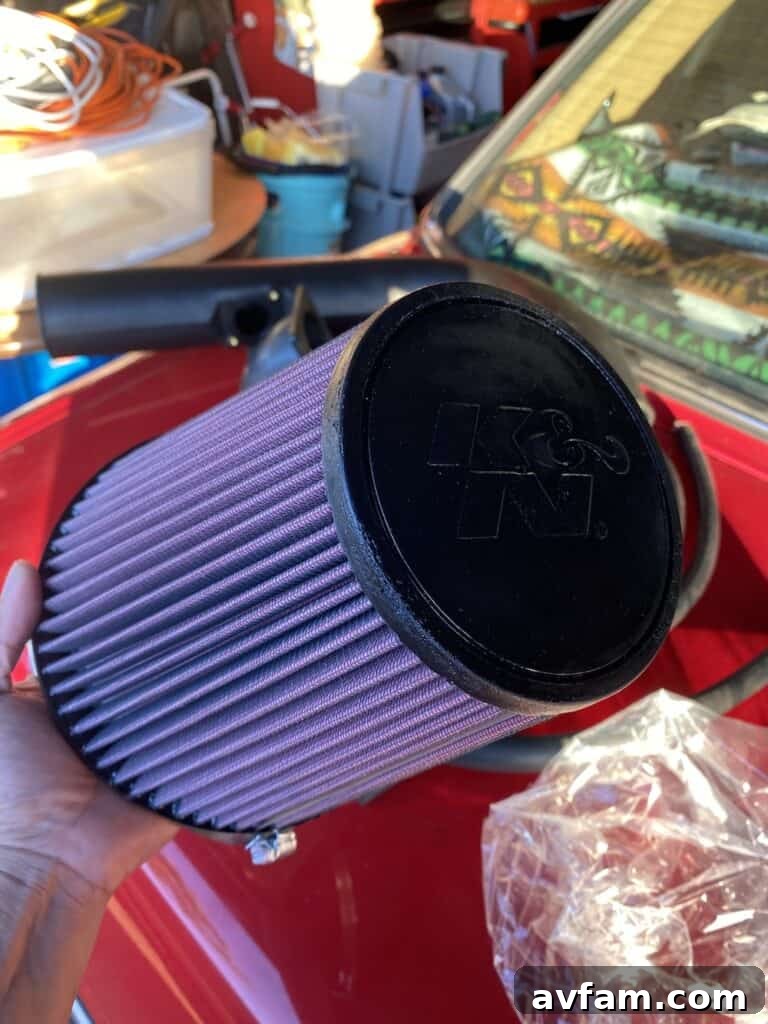
The K&N 57-2556 cold air intake for my F-150 arrived in a reasonably sized box, packed neatly with all the necessary hardware and, crucially, clear, step-by-step instructions. This specific model is K&N’s more budget-friendly option, featuring a roto-molded HDPE plastic intake tube. While it may not have the aesthetic flair of the polished or powder-coated aluminum versions, it delivers identical performance benefits. For me, function over form was the priority, and the HDPE construction offers excellent durability and heat resistance.
Even with K&N’s excellent written instructions and included photos, I found it incredibly helpful to cross-reference with this detailed YouTube video during the installation process. Visual guides can often clarify steps that might seem ambiguous in print.
Tools and Time Required
The tool list was minimal: a standard socket set was essential, and I also used an impact driver to easily drill a small pilot hole through some sheet metal for mounting the heat shield securely. If you don’t have an impact driver, a regular drill will work just fine. Having never installed an intake before, I approached the task cautiously, taking my time to ensure every step was correctly executed. Even with my deliberate pace, the entire installation took me approximately an hour and a half. The process was surprisingly straightforward and went remarkably smoothly, a testament to K&N’s well-engineered design and clear instructions.
Comparing Intake Tubes: Size Matters for Airflow
One of the key design differences contributing to the K&N system’s superior performance is the diameter of its intake tube. The K&N tube is an inch larger than the factory equivalent, providing a significant increase in the volume of air that can pass through to the engine. This increased cross-sectional area directly translates to less restriction and more airflow, which is crucial for maximizing horsepower and throttle response.
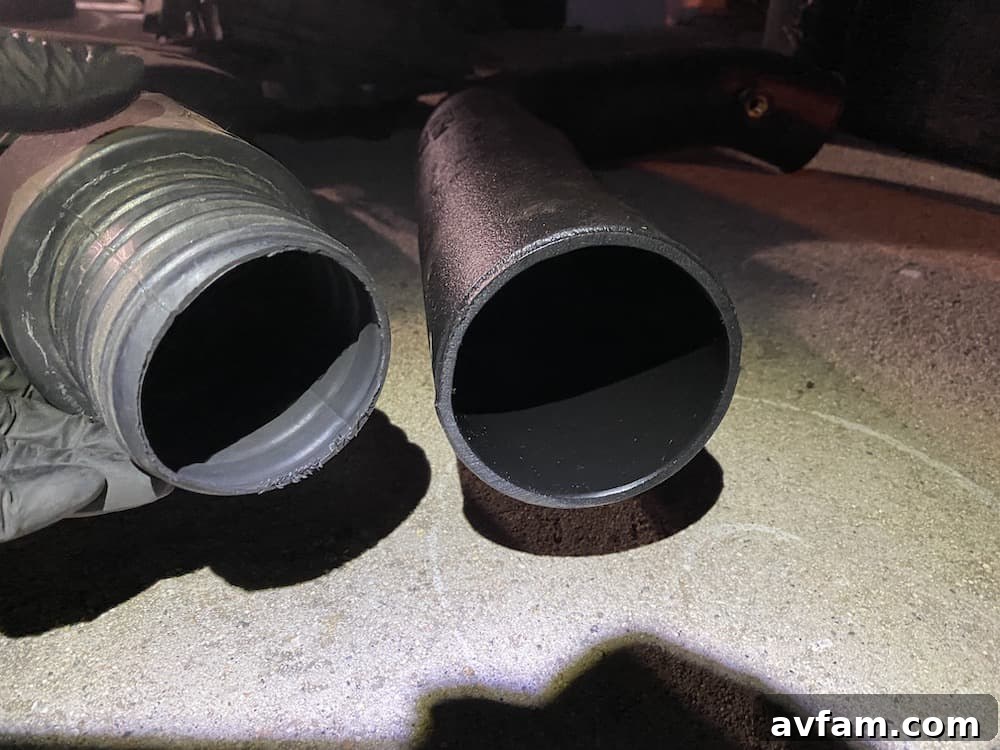
Lining the two components up side-by-side truly highlights the substantial difference in size. The factory tube appears notably more constrictive compared to the free-flowing K&N design. This visual comparison alone reinforces the immediate impact this upgrade will have on the engine’s breathing capabilities.
Upon engine startup after installation, I admit there was a brief moment of anxiety, wondering if a dreaded check engine light would illuminate. However, my F-150 roared to life without a hitch, and the dashboard remained clear. The successful start confirmed a proper installation, and I couldn’t wait to test its capabilities on the open road.
The Driving Experience: Feeling the K&N Difference
The true test of any performance modification lies in its real-world impact. The very next day after installation, my F-150 faced its first challenge: a family trip from LA down to Newport Beach, loaded to the brim with kids, bikes, skateboards, and surfboards. This scenario – a heavily laden truck on the highway – provided the perfect proving ground for the K&N cold air intake.
The truck performed admirably, but what truly stood out was the noticeable improvement when I needed to apply the pedal for passing. The F-150 seemed to drop into third gear with greater urgency and accelerated much harder through the crucial 40 to 60 mph range. This enhanced responsiveness made highway driving feel safer and more confident, especially when maneuvering around slower traffic.
When I really “stomped on it,” the distinct whir of the intake was clearly audible, but it blended harmoniously with the roar of my Flowmaster aftermarket exhaust. In fact, if I hadn’t already upgraded the exhaust, the intake sound would have been even more pronounced. The engine now seems to rev up to its optimal RPM range much faster, which has subtly adjusted the shift points of the transmission. This translates into a world of difference, particularly during passing maneuvers or when handling the extra load of towing. While I haven’t observed a dramatic difference in initial acceleration from a dead stop, the mid-range of the powerband now feels like the absolute sweet spot, delivering robust and readily available power.
Beyond Performance: Reduced Maintenance
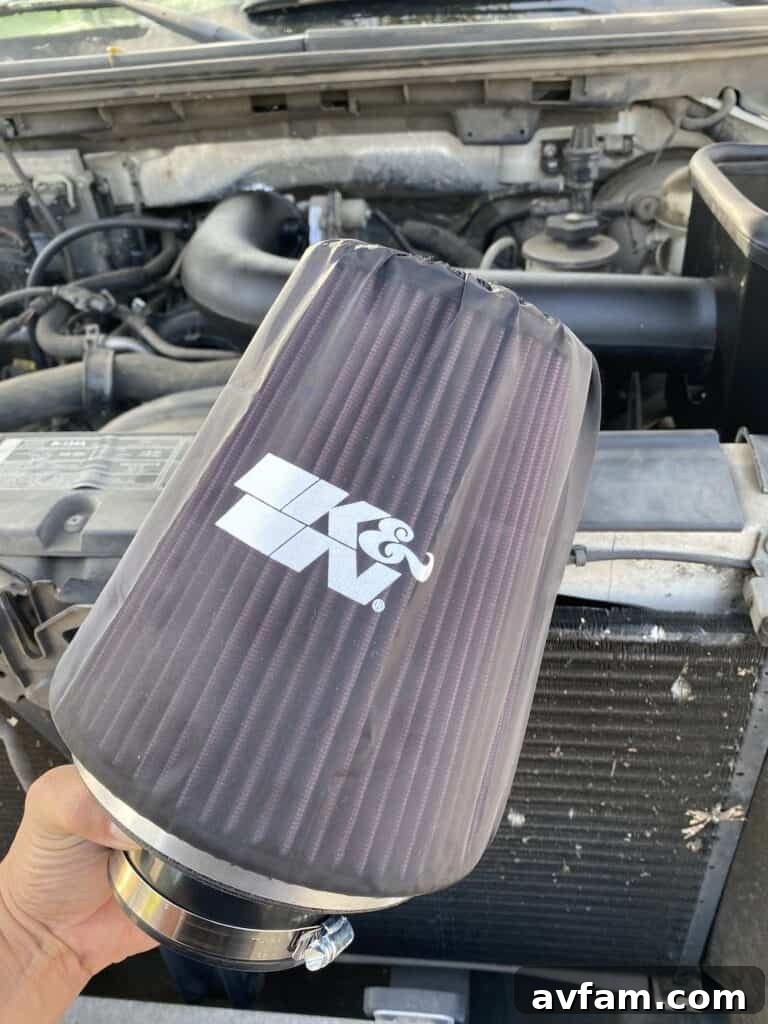
Another significant advantage of the K&N cold air intake is its reduced maintenance schedule. Unlike disposable paper filters that require frequent replacement, the K&N reusable filter is designed to last up to 100,000 miles before needing to be cleaned and re-oiled. While K&N provides this impressive interval, I plan to inspect mine every 10,000 miles, especially considering the dusty environments I sometimes drive in, just to ensure there are no blockages and it remains in optimal condition. To further prolong the life of the filter and provide an extra layer of protection against water, moisture, and fine dust, I also installed an air-filter wrap. This simple addition helps keep the main filter cleaner for longer, ensuring consistent performance and extending its service life even further.
Final Verdict: A Highly Recommended Performance Upgrade
Looking back, my only regret is not having installed a K&N cold air intake sooner. This single modification has injected new life into my aging 5.4L V8, making it feel more spry and responsive than it has in years. The immediate and tangible improvements in throttle response and mid-range power are genuinely impressive, transforming the driving experience of my Ford F-150.
For those seeking an effective, bolt-on performance modification that won’t void your vehicle’s warranty or break the bank, a K&N cold air intake is an exceptionally wise investment. It’s a foundational upgrade that sets the stage for further enhancements, and for me, the next logical step will be to explore a custom tuner to truly unlock every ounce of power hidden within this revitalized truck. The synergy between a less restrictive intake and optimized engine tuning promises even more exhilarating results.
Whether you drive a car or a truck, if you’re looking to improve your engine’s breathing, boost its power, and enhance your driving enjoyment, a K&N cold air intake comes with my strongest recommendation. It’s a straightforward upgrade that delivers significant, measurable results, providing excellent value for its cost. Experience the thrill of your engine breathing freely and discover the hidden potential of your vehicle.