
Mastering the Art of Small Kitchen Organization: Ingenious Solutions for Compact Spaces
For many years, my home has embraced the charm and efficiency of a small kitchen. While some might see it as a limitation, I’ve discovered a profound appreciation for having everything within arm’s reach. The convenience is undeniable; no sprawling distances to cover, just a cozy, functional hub for culinary creation. However, making the most of a compact kitchen does require a strategic approach. Over 15 years, living in bustling cities like New York and Los Angeles, our family has refined a collection of clever tricks to transform these modest spaces into highly efficient and enjoyable areas. With a toddler now adding to the dynamic, these solutions have only become more essential, proving that smart organization benefits everyone in the household.
If you’re grappling with limited counter space or overflowing cabinets, you’re in the right place. Forget the grandiose kitchens often featured in glossy magazines; these practical, battle-tested tips are designed for real-world application, helping you unlock your small kitchen’s full potential. Prepare to rethink how you organize, store, and utilize every inch of your compact culinary haven.
Maximize Your Oven’s Hidden Storage Potential
In a small kitchen, every unused volume of space is a missed opportunity. Your oven, when not in operation, is essentially a large, empty cabinet complete with sturdy racks. This often-overlooked area can be a lifesaver for storing bulky, heavy items that don’t fit neatly into traditional cupboards. We primarily use ours for our heavy cast-iron pots and pans, including cherished Le Creuset pieces. These items are perfect candidates because they are robust, heat-resistant, and frequently used, yet often cumbersome to store elsewhere.
However, this strategy comes with a crucial caveat: **safety first.** I learned this the hard way after accidentally preheating the oven with an apron and rubber mitts inside. The discovery was, to put it mildly, unpleasant. Therefore, only store items that are completely oven-safe and can withstand high temperatures. Avoid anything plastic, silicone, or fabric. Always double-check the contents before turning on your oven. Developing a habit of briefly opening the oven door to verify it’s empty before use can prevent hazardous situations. While there might be more conventional storage alternatives, the sheer convenience and immediate accessibility of storing heavy cookware in the oven have made this an indispensable trick for us. It’s a pragmatic solution that keeps heavy items out of sight and frees up valuable cabinet space for lighter, more frequently accessed essentials.
Embrace Vertical Space with Modular Elfa Systems
When horizontal space is a luxury, looking upwards and utilizing narrow gaps becomes critical. This is where modular storage solutions like the Elfa system shine. We designed a custom Elfa drawer system to fit perfectly into a very narrow alcove in our kitchen, transforming what would otherwise be dead space into incredibly effective storage. While their appearance is purely utilitarian, their functionality is unmatched for maximizing storage efficiency in confined areas.
The beauty of Elfa (and similar modular systems) lies in its simplicity and adaptability. Drawers and trays glide smoothly along tracks, offering easy access without complex moving parts that can break. This system allows for incredible customization; you can choose different drawer depths and widths to accommodate a variety of items, from pantry staples and spices to cleaning supplies, linens, or even small appliances. By stacking these drawers vertically, you effectively multiply your storage capacity, keeping your countertops clear and your kitchen organized. It’s a smart investment for any small kitchen owner looking to create tailored storage solutions that fit unique nooks and crannies, making the most of every precious inch.
Revolutionize Refrigerator Organization with Smart Shelving and Trays
The refrigerator is often a battleground for organization, especially in a small kitchen where every food item needs a designated spot. Simply adding a few extra shelves and investing in specialized trays can dramatically improve its capacity and usability. These simple additions help you make optimal use of the entire height and depth of your fridge, preventing items from getting lost or forgotten.
Slide-out trays are particularly revolutionary. They allow you to access items stored at the very back of the fridge without having to unload everything in front. This not only saves time but also significantly reduces food waste by ensuring you can easily see and reach everything before it expires. Supplemental shelves, often adjustable or stackable, create additional tiers within existing spaces, perfect for stacking smaller items like yogurts, deli meats, or bottled beverages, thus leveraging vertical space. Consider clear bins for grouping similar items (e.g., all condiments, all snacks, all vegetables) to maintain order and make retrieval effortless. By zoning your fridge with these organizational tools, you transform a chaotic cold storage unit into an efficient, easy-to-manage system, ensuring that food is not only stored effectively but also consumed before it spoils.
Master Vertical Storage: Hooks, Magnets, and Wall-Mounted Solutions
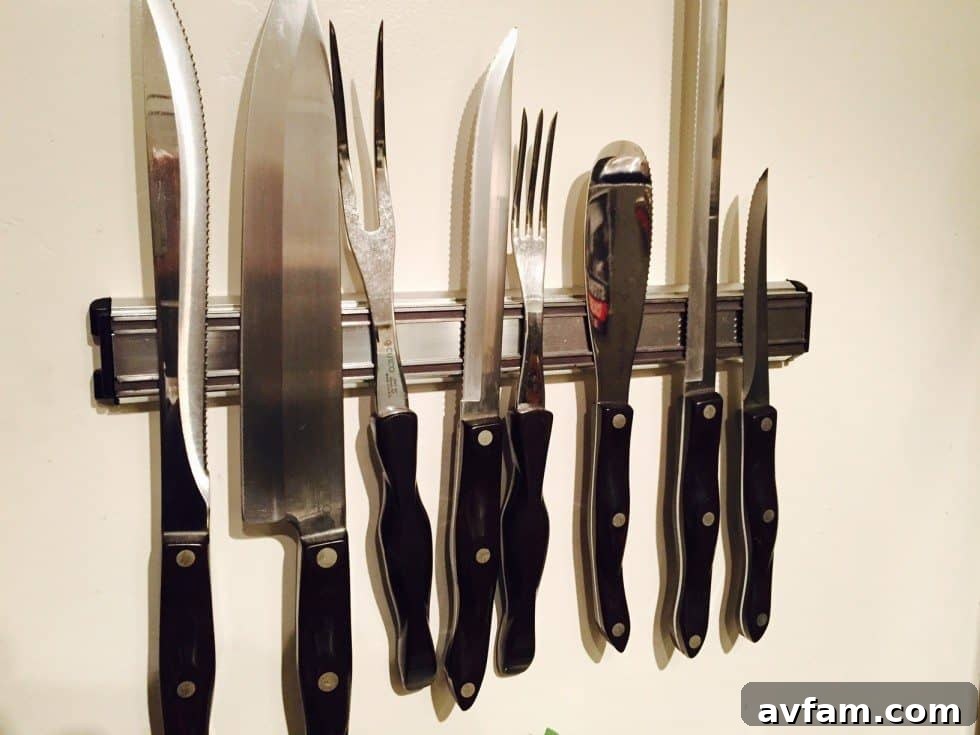
The golden rule for small kitchen success is simple: get things off the countertop. Counter space is precious, serving as your primary workspace, and anything that can be stored elsewhere should be. Traditional knife blocks and utensil crocks, while charming, consume valuable real estate. This is where vertical storage solutions like magnetic strips and hooks become indispensable tools for a clutter-free kitchen.
A magnetic knife strip installed on a backsplash or an empty wall segment is a game-changer. It securely holds knives, freeing up drawer space and countertop room, while also making them easily accessible. For measuring cups, spoons, and frequently used utensils, simple adhesive or screw-in hooks are incredibly effective. Mount them inside cabinet doors, on the side of an island, or directly on an empty wall. Don’t forget the power of pegboards or wall-mounted rail systems, which offer customizable storage for a multitude of items, from spice racks to small pots and pans. If your kitchen boasts high ceilings, consider a ceiling-mounted pot rack. This not only clears out valuable cabinet space but also adds a professional, rustic touch to your kitchen aesthetic. By effectively utilizing your walls and even your ceiling, you can dramatically expand your storage capacity without sacrificing a single inch of counter space, creating an environment that feels more open and inviting.
Illuminate Your Culinary Space: Strategic Kitchen Lighting
Lighting is often an overlooked aspect of small kitchen design, yet it plays a crucial role in both functionality and ambiance. Shadows are a common problem in compact spaces, especially when overhead lighting is the sole source. As you lean over a countertop or stand at the stove, you inevitably obstruct the light, making it difficult to see what you’re doing. Inadequate lighting can make a small kitchen feel even smaller, darker, and less inviting.
To combat this, consider a layered lighting approach. Under-cabinet lighting is arguably the most impactful upgrade for a small kitchen. LED strip lights or puck lights installed beneath upper cabinets provide direct task lighting onto your countertops, eliminating shadows and brightening your workspace for meal prep and cooking. Beyond task lighting, think about accent lighting to highlight architectural features or open shelving, and even ambient lighting from sconces or recessed lights to create a more welcoming atmosphere. Natural light should also be maximized; keep window treatments minimal to allow as much daylight as possible. Strategic lighting not only improves visibility and safety but also makes your small kitchen feel more expansive, modern, and pleasant to be in, transforming a potentially cramped space into a well-lit and efficient culinary sanctuary.
Declutter Your Kitchen: Store Non-Essentials Off-Site
One of the simplest yet most effective ways to create more space in a small kitchen is to ruthlessly evaluate what truly needs to be stored within its confines. Many kitchens are cluttered with items that are used infrequently, perhaps only a few times a year. Your grandmother’s china set, elegant champagne flutes, holiday-themed mugs, specialized baking equipment, or rarely used serving platters are all examples of “non-essential” kitchen gear that consume valuable space.
These items don’t need to take up prime real estate on your everyday kitchen shelves or in your precious cupboards. Identify alternative storage locations elsewhere in your home. This could be a basement, garage, attic, a dedicated pantry outside the main kitchen area, or even a discreet storage box in a guest bedroom closet. The goal is to keep only the items you use on a daily or weekly basis readily accessible in your kitchen. By relocating these less-used items, you free up significant space for the essentials, making your kitchen feel less cluttered, more organized, and far more functional. Regularly auditing your kitchen inventory and being honest about usage frequency is key to maintaining a streamlined, efficient small kitchen.
Curate Your Collection: Edit and Optimize Appliances
The allure of a new gadget can be strong, but in a small kitchen, every appliance must earn its spot. A critical step in maximizing space is to rigorously edit your collection of kitchen appliances. If you only use that bulky toaster oven once a month, is it truly worth the valuable countertop real estate it occupies? Probably not. Embracing a minimalist approach to appliances can free up significant space and simplify your cooking routine.
Consider multi-functional appliances that can perform several tasks, reducing the need for multiple single-purpose gadgets. For example, a modern air fryer often doubles as a small convection oven, toaster, and even a dehydrator, making it a powerful space-saver. Opt for compact, powerful alternatives where possible: a magic bullet or immersion blender can often replace a large, cumbersome blender. Ditch the traditional drip coffee maker for a sleek Aeropress or a pour-over system, which are much smaller and easier to store. Handheld tools often outperform their electric counterparts in terms of space efficiency and even performance for certain tasks. Be honest with yourself about how often you use each appliance. If an item is gathering dust, consider donating it or selling it. By thoughtfully curating your appliance collection, you not only reclaim valuable counter and cabinet space but also foster a more efficient and less cluttered cooking environment, making room for the tools you truly need and love.
Embrace a Holistic Approach to Small Kitchen Living
Beyond these specific tips, the overarching philosophy for successful small kitchen living is mindfulness and creativity. It’s about seeing limitations not as obstacles, but as invitations for ingenious solutions. Regularly decluttering, investing in multi-purpose items, and consistently looking for vertical storage opportunities are habits that will serve you well. A small kitchen encourages intentional living and often leads to a more efficient cooking style, reducing waste and simplifying routines. By applying these strategies, you’ll transform your compact kitchen into a highly functional, beautifully organized space that you truly enjoy, regardless of its size.