
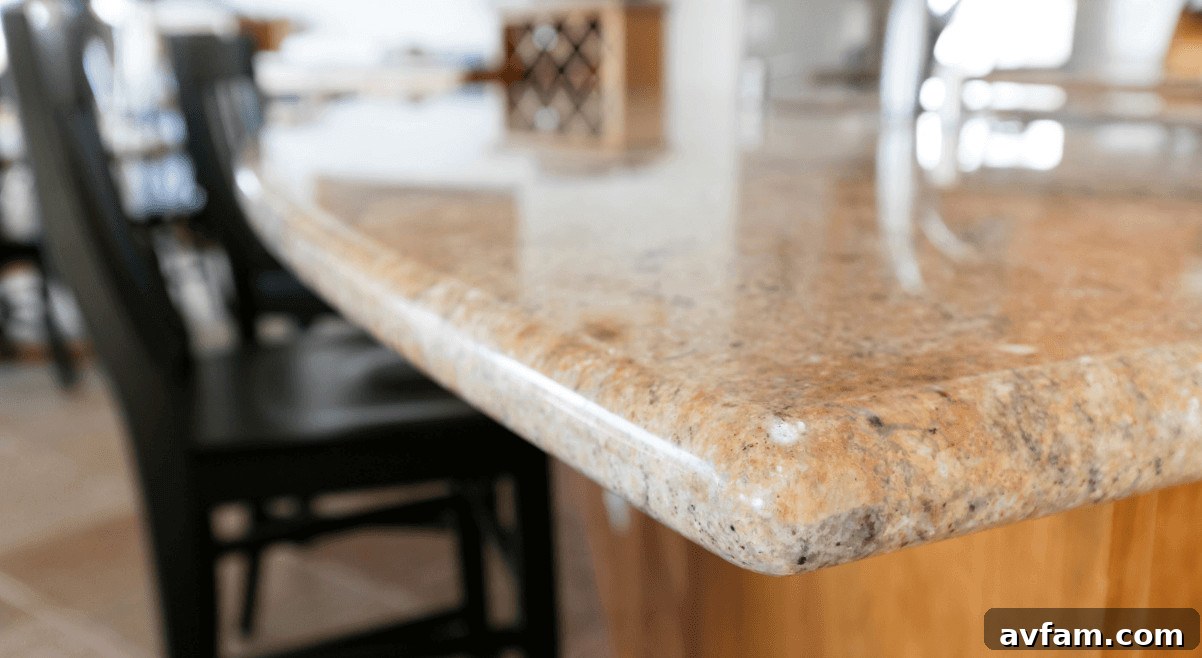
Homeowners choose natural stone countertops for the timeless beauty and durability they bring to kitchens and bathrooms. In everyday life, however, spills and splatters are inevitable. Granite, marble, quartzite and limestone each have different porosity levels, and many natural stones will absorb liquids if spills are left on an unprotected surface.
When liquids penetrate the stone, the surface can temporarily darken or, depending on the spill, develop a lasting stain. Understanding what causes these marks makes it easier to respond quickly and reduce the risk of discoloration. Below are the most common causes of countertop stains and practical strategies to prevent and manage them.

Common Causes of Stone Countertop Stains
Typical kitchen activities generate many staining risks. Cooking oils, butter and sauces can soak into porous, unsealed stone. Acidic ingredients such as citrus juice, tomato sauce or vinegar can etch or dull calcium-rich materials like marble and some limestones. Beverages such as red wine, coffee and tea contain pigments that may leave marks if they sit long enough to penetrate the surface.
Protective sealers play an important role in preventing stains. Some sealers create a surface coating, while penetrating sealers soak into the stone’s pores and slow absorption from within. Using an appropriate, stain-resistant sealer gives you more time to clean spills before liquids reach the stone below the finish.
How Porous Stone Absorbs Liquids
Porosity varies significantly among natural stones. Dense stones like many granites absorb less liquid than more porous materials such as certain limestones and travertine. Small pore spaces draw liquids beneath the surface through capillary action, which is why even clear liquids can eventually cause a darkened patch.
Over time and with frequent use, sealers can wear down or lose effectiveness. Regular inspection and timely resealing help maintain resistance to liquids. If you notice that water no longer beads or that the finish looks uneven, these are signals that resealing may be necessary.
Everyday Culprits Behind Countertop Discoloration
Beyond food and drink, other common sources of staining include cooking grease that goes unnoticed during meal prep, hard water deposits that leave cloudy marks near sinks, and metal items that can cause rust-colored spots on damp stone. Household products such as soaps, lotions and cosmetics may leave residues or react with certain stone finishes, and some cleaners not formulated for natural stone can damage the surface.
Being aware of what comes into regular contact with your countertop makes it easier to prevent problems. Keep an eye on frequently used areas, and avoid placing metal cans or wet tools directly on the stone for prolonged periods.
Preventing Stains Before They Start
Prompt cleanup is one of the simplest, most effective preventative measures. Blot spills immediately—don’t rub—and clean the area with a soft cloth and a cleaner approved for your stone type. Use coasters under drinks, trivets for hot cookware and cutting boards during food preparation to protect the surface from heat, moisture and scratches.
Select cleaning products formulated for natural stone and test any new cleaner on an inconspicuous area before applying it broadly. Periodically test the countertop’s water repellency by placing a few drops of water on the surface; if the water beads, the sealer is still effective. If it soaks in, resealing is recommended according to the stone and sealer manufacturer’s guidance.
Caring for Stone Countertops Long Term
Long-term stone care is built on consistent habits rather than occasional deep cleaning. Regularly inspect the countertop for changes in how liquids behave on the surface and for any areas that look different from the surrounding stone. These changes can indicate wear or diminished protection.
How often a countertop needs resealing depends on the specific stone, the sealer used, and the amount of daily activity. Kitchen countertops generally require more frequent checks than bathroom vanities because they experience more spills and food preparation. Use soft cloths and mild, stone-appropriate cleaners to maintain the finish without accelerating wear.
Natural stone countertops are relatively low-maintenance when cared for consistently. Blot spills promptly, use suitable cleaners, protect the surface with coasters and cutting boards, and reseal as needed. These straightforward habits help prevent discoloration and preserve the natural character and beauty that make stone such a desirable choice for homes.