
The Ultimate Guide to Hardwoods vs. Softwoods: Understanding Wood Types for Your Projects
For centuries, wood has been an indispensable material in construction, furniture making, and countless other crafts. However, navigating the vast world of lumber can be confusing, especially when encountering terms like “hardwood” and “softwood.” Many assume these classifications are solely based on the physical hardness of the wood, leading to common misconceptions. In reality, the distinction between hardwoods and softwoods is rooted in botany, not necessarily the wood’s density or resistance to indentation.
This comprehensive guide will demystify the true definitions of hardwoods and softwoods, explore their unique characteristics, provide extensive lists of examples, and help you understand which type is best suited for your next project. By clearing up common misunderstandings, you’ll be better equipped to make informed decisions, whether you’re a seasoned carpenter or a budding DIY enthusiast.
Dispelling the Hardness Myth: What Really Defines Wood Types?
The most pervasive myth in the lumber industry is that hardwoods are always hard and softwoods are always soft. This is simply not true. While many hardwoods are indeed very dense and resistant to impact, and many softwoods are relatively pliable, there are significant exceptions that defy this simple rule. For instance, Balsa wood, famously known for its lightness and softness, is botanically classified as a hardwood. Conversely, some softwoods, like Yew or Douglas Fir, can be considerably harder and more durable than certain hardwoods.
The absence of a definitive physical hardness scale to divide these two groups highlights why relying on the “hard vs. soft” rule of thumb is misleading. Instead, the real differentiation lies in the botanical classification of the trees from which the wood is harvested.
The True Distinction: Botanical Classification
In the lumber trade, the custom has evolved to classify wood based on the type of tree it originates from. This distinction is purely botanical:
What Defines Hardwoods?
Hardwoods come from angiosperm trees. These are typically broad-leaved trees, and in temperate climates, they are often deciduous, meaning they shed their leaves annually. Examples include oak, maple, cherry, and walnut. Angiosperms produce seeds that are enclosed within a fruit or shell.
Beyond their botanical origin, hardwoods generally share several characteristics:
- Slower Growth Rate: Hardwood trees typically grow slower than softwoods, leading to a denser wood grain.
- Complex Cell Structure: Their cellular structure is more complex, featuring vessel elements (pores) that transport water throughout the tree, which often appear as distinct grain patterns.
- Density and Durability: While not universally true, many hardwoods are denser and more durable, making them highly resistant to wear and tear.
- Aesthetic Appeal: Hardwoods often boast rich colors, intricate grain patterns, and a beautiful natural luster, making them highly prized for fine furniture and decorative applications.
- Cost: Due to their slower growth, greater durability, and aesthetic qualities, hardwoods are generally more expensive than softwoods.
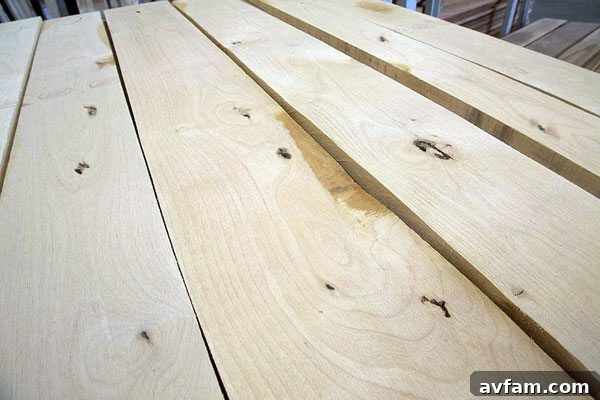
Common Hardwood Species in the United States:
According to organizations like the National Lumber Manufacturers Association, hardwoods found in the United States encompass a wide variety:
- Alder: A relatively soft hardwood, known for its uniform texture and reddish-brown hue, often used for furniture and cabinetry.
- Ash: Strong and flexible, with an open grain, excellent for tool handles, sports equipment, and furniture.
- Aspen: Light in color and weight, with a fine, uniform texture, often used for pulpwood, matches, and interior construction.
- Basswood: Very soft and light, with an inconspicuous grain, making it ideal for carving and musical instruments.
- Beech: Hard, strong, and resistant to shocks, commonly used for flooring, furniture, and veneers.
- Birch: A strong, close-grained wood, often used for furniture, cabinetry, and plywood.
- Buckeye: Known for its light weight and softness, often used for carving.
- Butternut: A light, soft hardwood with a beautiful grain, suitable for carving and furniture.
- Cherry: Prized for its rich, reddish-brown color that darkens with age, and its fine, straight grain, perfect for fine furniture and cabinetry.
- Chestnut: Historically important, known for its rot resistance, though American Chestnut is now rare due to blight.
- Cottonwood: Light, soft, and somewhat brittle, used for crates, boxes, and some furniture parts.
- Elm: Known for its interlocking grain, making it resistant to splitting, often used for furniture and boat building.
- Gum (Sweetgum): A versatile hardwood with fine grain, often used for furniture, cabinetry, and veneers.
- Hackberry: Moderate strength and good workability, sometimes used as a substitute for elm or ash.
- Hickory: One of the hardest and strongest American woods, highly prized for tool handles, flooring, and sporting goods.
- Locust: Exceptionally hard and durable, with excellent resistance to decay, used for fence posts and outdoor furniture.
- Magnolia: Moderate hardness and density, with a fine, uniform grain, suitable for furniture and interior trim.
- Maple: A very popular hardwood, especially Hard Maple, known for its exceptional hardness and fine grain, used for flooring, furniture, and cutting boards.
- Oak: Both Red and White Oak are iconic hardwoods, renowned for their strength, durability, and distinctive grain patterns, widely used for furniture, flooring, and cabinetry.
- Sycamore: Has a distinctive, speckled grain, often used for furniture, veneers, and butcher blocks.
- Walnut: Highly valued for its beautiful dark color and rich grain, making it a premium choice for fine furniture, cabinetry, and gunstocks.
- Willow: Light and flexible, often used for wicker furniture, baskets, and some carvings.
- Yellow Poplar (Tulip Poplar): A relatively soft hardwood with a straight grain and uniform texture, commonly used for paint-grade cabinetry, core stock, and utility purposes.
What Defines Softwoods?
Softwoods originate from gymnosperm trees, which are typically coniferous trees. These are popularly known as evergreens, characterized by needles or scale-like leaves and cones that bear seeds. Pine, spruce, and fir are classic examples. Gymnosperms produce “naked” seeds, meaning they are not enclosed within a fruit.
Like hardwoods, softwoods also share common characteristics:
- Faster Growth Rate: Softwood trees generally grow much faster, resulting in less dense wood.
- Simpler Cell Structure: Their cellular structure is simpler, primarily consisting of tracheids that transport water, lacking the distinct vessel elements found in hardwoods.
- Density and Workability: Most softwoods are less dense than hardwoods, making them lighter, easier to cut, and more workable with tools.
- Appearance: Softwoods tend to have a lighter color and more pronounced, often wider, growth rings.
- Cost: Due to their faster growth and abundance, softwoods are typically more affordable and widely available.
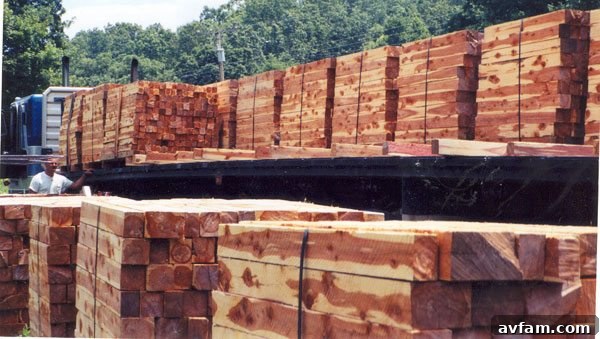
Common Softwood Species in the United States:
The list of softwoods is equally diverse and crucial for many industries:
- Cedar: Known for its distinctive aroma, natural resistance to rot and insects, making it excellent for outdoor applications like decking, fencing, and shingles.
- Juniper: Often used for decorative purposes, small carvings, and fence posts due to its durability.
- Cypress: Highly resistant to rot and insect damage, making it ideal for outdoor construction, boats, and siding, especially Bald Cypress.
- Douglas Fir: One of the strongest and most widely used structural softwoods, excellent for framing, plywood, and heavy construction due to its strength-to-weight ratio.
- True Fir (e.g., Balsam Fir, Noble Fir): Generally softer than Douglas Fir, often used for pulpwood, Christmas trees, and light construction.
- Hemlock: Known for its strength and good working properties, used for framing, sheathing, and subflooring.
- Larch: A deciduous conifer, meaning it sheds its needles. It is quite dense and durable for a softwood, often used for exterior applications, decking, and posts.
- Pine (e.g., Ponderosa, Eastern White, Southern Yellow): The most common softwood, highly versatile and affordable. Used extensively for framing, furniture (especially rustic), trim, and plywood.
- Redwood: Highly prized for its natural resistance to decay and insects, and its beautiful reddish color. Ideal for outdoor structures, decking, and siding.
- Spruce: Light, strong, and flexible, commonly used for framing, musical instruments (soundboards), and paper pulp.
- Tamarack: Similar to Larch, it’s a deciduous conifer, offering good strength and durability for a softwood, suitable for posts and rustic construction.
- Yew: Unusually dense and strong for a softwood, historically used for longbows, now primarily for turning and decorative items.
Key Differences at a Glance
To summarize, here’s a quick comparison of the fundamental distinctions between hardwoods and softwoods:
- Botanical Origin: Hardwoods are angiosperms (broad-leafed), softwoods are gymnosperms (conifers).
- Leaf Type: Hardwoods have broad leaves, softwoods have needles or scale-like leaves.
- Seed Type: Hardwood seeds are enclosed (e.g., in nuts, fruits), softwood seeds are “naked” (e.g., in cones).
- Growth Rate: Hardwoods generally grow slower; softwoods generally grow faster.
- Cellular Structure: Hardwoods have complex structures with vessel elements (pores); softwoods have simpler structures dominated by tracheids.
- Density & Durability: Often, but not always, hardwoods are denser and more durable.
- Typical Uses: Hardwoods for furniture, flooring, cabinetry, decorative items; Softwoods for framing, construction, paper, plywood, general utility.
- Cost: Hardwoods are typically more expensive; softwoods are typically more affordable.
Choosing the Right Wood for Your Project
Understanding the distinctions between hardwoods and softwoods is crucial for selecting the appropriate material for any woodworking or construction project. The “best” wood isn’t about hardness; it’s about suitability for the intended application.
Consider the following factors when making your choice:
- Durability and Strength Requirements:
- For high-traffic flooring, durable furniture, or items needing high impact resistance (e.g., cutting boards), hardwoods like Oak, Maple, or Hickory are excellent choices.
- For structural framing where strength-to-weight ratio and cost-effectiveness are key, softwoods such as Douglas Fir or Southern Yellow Pine are preferred.
- Workability and Ease of Use:
- If you’re a beginner or tackling a project requiring intricate cuts, carving, or simple assembly, softwoods like Pine or Basswood are generally easier to work with.
- Hardwoods can be more challenging to cut and shape due to their density but offer superior detail retention and finish quality.
- Aesthetic Appeal:
- For projects where the visual appeal of the grain and natural color is paramount (e.g., fine furniture, decorative panels), hardwoods like Cherry, Walnut, or figured Maple provide rich, distinctive beauty.
- Softwoods often offer a lighter, more uniform look, which can be desirable for painted finishes or a rustic aesthetic.
- Cost and Budget:
- For large-scale construction, utility projects, or when budget is a primary concern, softwoods offer a more economical solution.
- Hardwoods, while more expensive upfront, often provide greater longevity and perceived value for heirloom pieces.
- Environmental Exposure and Resistance:
- For outdoor applications like decking, fences, or exterior siding, softwoods like Cedar, Redwood, or Cypress are excellent due to their natural resistance to rot, decay, and insects. Some hardwoods, like Locust, also offer superior outdoor performance.
- Most interior hardwoods, while durable indoors, require proper finishing and protection for outdoor use.
- Sustainability:
- Consider sourcing wood from sustainably managed forests, often indicated by certifications like FSC (Forest Stewardship Council), regardless of whether you choose hardwood or softwood.
Conclusion: An Informed Choice for Every Project
The world of wood is rich and varied, offering a material for virtually every purpose. The key to successful woodworking or construction lies not in blindly following the “hard means good” fallacy, but in understanding the fundamental botanical differences between hardwoods and softwoods. Each category boasts a diverse array of species, each with its own unique properties, strengths, and ideal applications.
By understanding that hardwoods originate from broad-leaved, typically deciduous trees (angiosperms) and softwoods from coniferous evergreens (gymnosperms), you can move beyond common misconceptions. This knowledge empowers you to select the right wood that perfectly matches the durability, aesthetic, workability, and cost requirements of your specific project, ensuring beautiful, lasting results.