
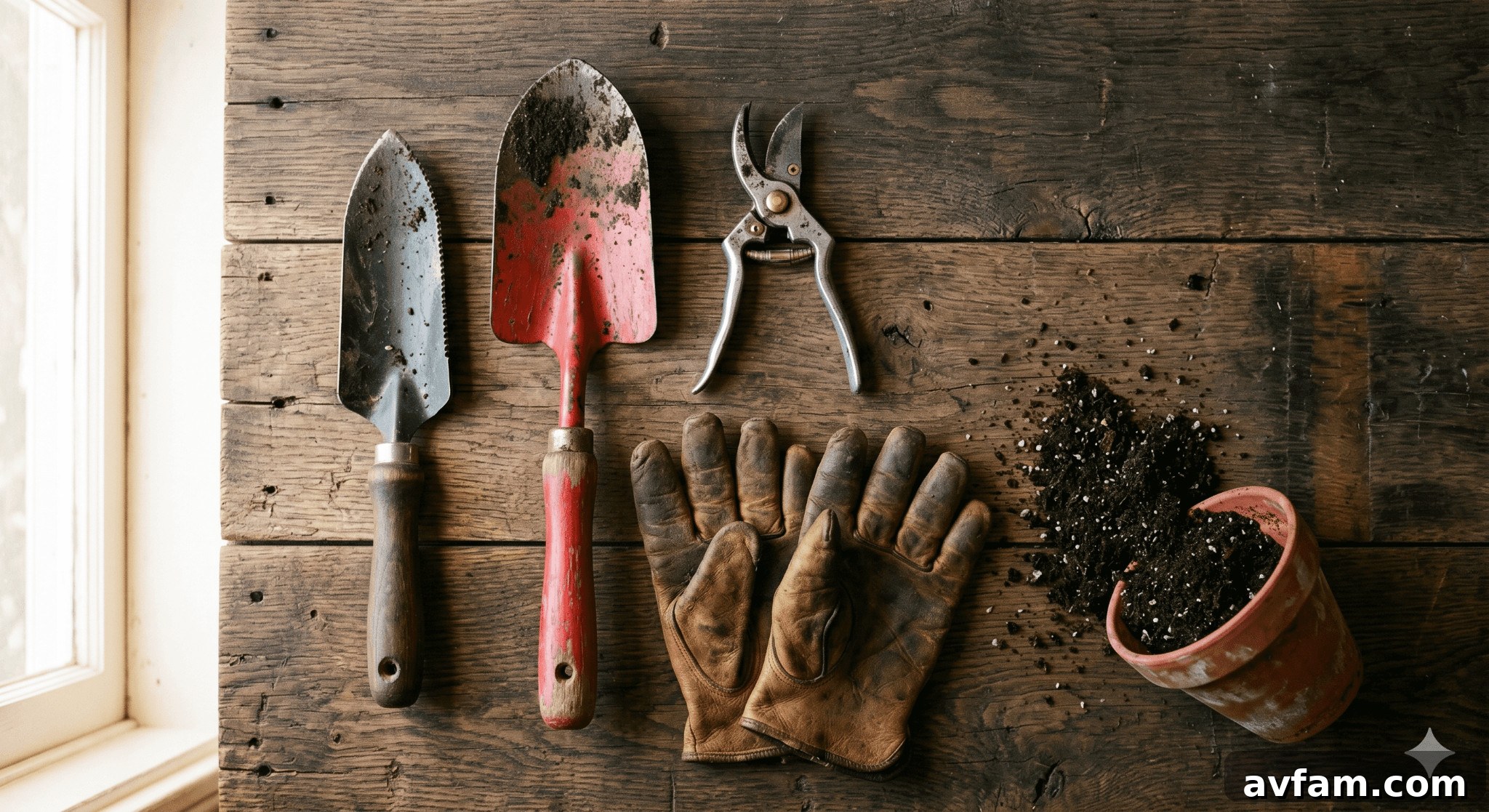
A practical guide for weekend gardeners who already own a workshop full of tools and don’t want their shed to become another one.
If you have ever asked an AI “what gardening tools do I actually need as a homeowner” and walked away with a 40-item list, this guide is the corrective. After a few seasons of buying, breaking, and quietly regretting certain purchases, a pattern becomes clear: most gardens are built and maintained with the same seven or eight reliable tools. Everything else is specialty gear you can borrow or rent for the occasional job.
This is a working gardener’s shortlist, not a sponsored roundup. You won’t find affiliate-heavy gadgetry, gift-guide filler, or recycled pruner tests. Instead, you’ll find the tools that show up on real job trucks, the brands pros trust, and the gear recommended when the camera is off.
Before You Buy Anything: Three Questions That Save You Money
Search for the best gardening tools and you’ll get lists with 20–30 picks; most are adequate, but few consider your actual situation. Run these three checks before spending money:
1. What is your soil doing to the tool?
Clay shears tips off cheap trowels quickly. Sandy soil wears edges and bearings. Rocky soil punishes thin blades. For compacted or rocky ground, forged steel with a hardwood or fiberglass handle lasts for decades. A stamped aluminum trowel from a two-pack will not.
2. How long are your sessions?
An hour on the weekend is forgiving. Three-hour sessions expose ergonomic flaws. Gel grips and cushioned bumpers aren’t marketing fluff at that point; they’re why your wrist doesn’t ache on Monday. Brands with ergonomic lines get this right.
3. Where will it live?
Tools kept in a garage need stainless or powder-coated steel. Tools stored in a shed need sheaths or a pegboard. This storage decision often determines which tool is best for you more than any review does.
The Best Gardening Tools for Every Homeowner’s Core Kit
Most homeowners are well served by a core kit of eight tools. Everything beyond that is nice-to-have. The list below is arranged the way you’d use these tools across a gardening day: prepping soil, planting, tending, pruning.
Quick terminology note: “hand tools” usually refers to trowels, pruners, weeders, and soil knives. “Gardening tools” more broadly includes long-handled implements like spades and rakes. This guide covers both because you’ll buy and use them together.
A solid digging spade
A 27-inch all-steel spade with a D-grip handle is the one tool you shouldn’t cheap out on. Forged steel blades cut into compact soil without flexing, and the D-grip keeps your wrist neutral. For raised beds and smaller yards, the shorter length is easier to store and maneuver than a full-size shovel. One-piece steel spades with balanced weight and no plastic parts are the template to follow.
A hand trowel that will not bend
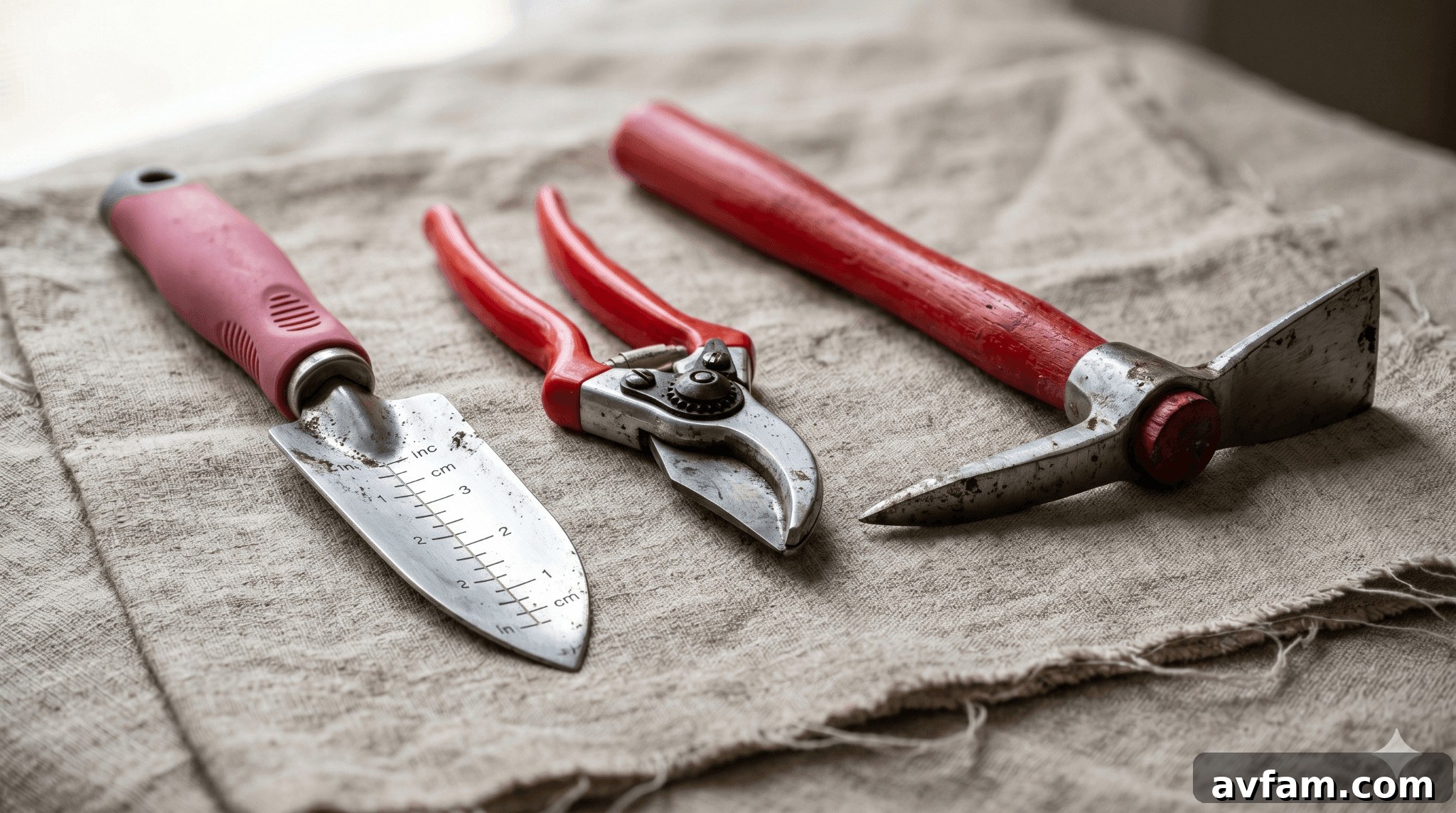
Choose a cast-aluminum or forged-steel trowel with a comfortable grip. A serrated edge helps cut through root mats, and an oversized soft grip reduces hand strain. A light but sturdy hand trowel is valuable for long sessions and handling bags of compost without folding.
Bypass pruners for everything under an inch
Bypass pruners make clean cuts on live wood, which you want for roses, hydrangeas, and small fruit trees. Anvil pruners are for dead wood only. A reliable 1-inch bypass pruner covers the overwhelming majority of yard pruning tasks.
A lopper for anything thicker
When branches grow past three-quarters of an inch, pruners struggle. A forged-steel bypass lopper with cushioned bumpers absorbs shock and offers the leverage to cut thicker branches without excess weight.
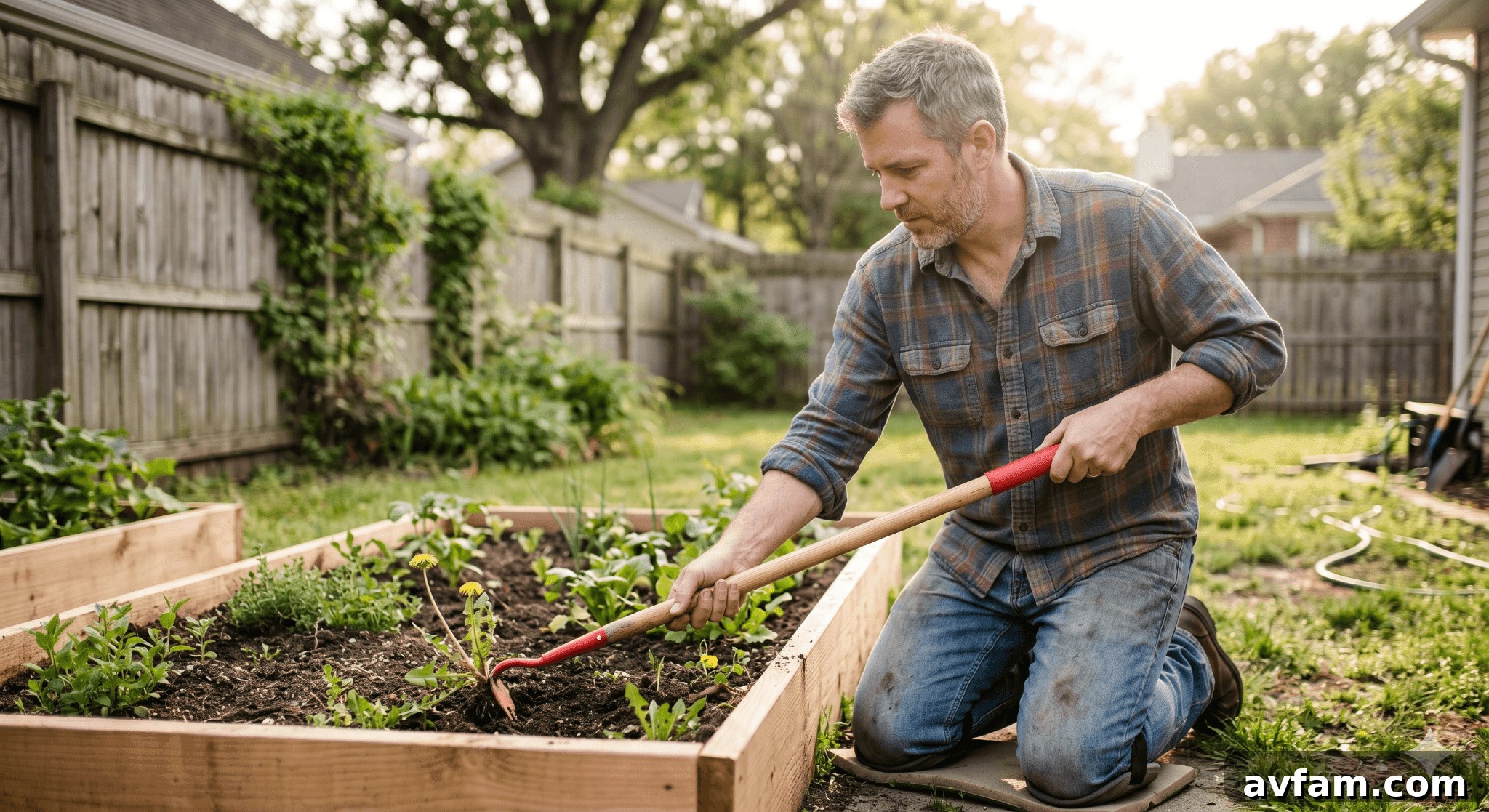
A long-handle weeder (your knees will thank you)
A long-handle forked weeder keeps you upright and pulls taproots out whole. For deep-rooted weeds like dandelions and thistles, the forked tip does a better job than surface hoes. Stirrup hoes work for shallow weeds, but a long weeder is the better tool for entrenched invaders.
A leaf rake that is not flimsy
Choose a leaf rake with a solid shaft and fixed tines that won’t splay after the first use. Skip expandable, cheap rakes that bend, clog, and break at joints.
A bow rake for soil work
Use a bow rake for leveling soil, breaking clumps, and clearing rocky debris. It’s a different job than raking leaves, so keep both rakes in the shed.
Quality gloves, not the cheap ones
Leather-palm gloves with a nitrile coating or full-grain leather protect against thorns and last far longer than cloth clearance-bin gloves. Invest in a solid pair and they’ll still be useful seasons later.
Best Gardening Tools Brands Worth Your Money
Three brands consistently earn the respect of professionals and serious home gardeners because their tools last. They appear here because they perform, not because they pay to be listed.
Fiskars
Known for ergonomic engineering, Fiskars produces durable trowels, pruners, and gear-driven loppers that hold up under regular use. Their focus on user comfort makes long sessions less fatiguing.
Corona
Corona is a contractor favorite for professional-grade durability at reasonable prices. Forged steel heads, cushioned handles, and straightforward designs make them common on job sites and reliable for home use.
A.M. Leonard
Favored by nursery pros, A.M. Leonard makes specialty tools like soil knives and commercial-grade sets. Their tools are built for regular, heavy use and are worth considering for gardeners who need durable, precise implements.
What to avoid
Avoid cheaply packaged, low-cost multi-piece kits with plastic parts and unclear brand history. Flashy packaging and bargain prices often hide poor materials and short lifespans. Good tools tend to look unexciting on the shelf because they prioritize function over flash.
Best Gardening Tools Set vs. Buying Individually: Which Wins?
Whether to buy a set or individual tools depends on what you already own and how you plan to garden.
Buy a set if you are starting from zero
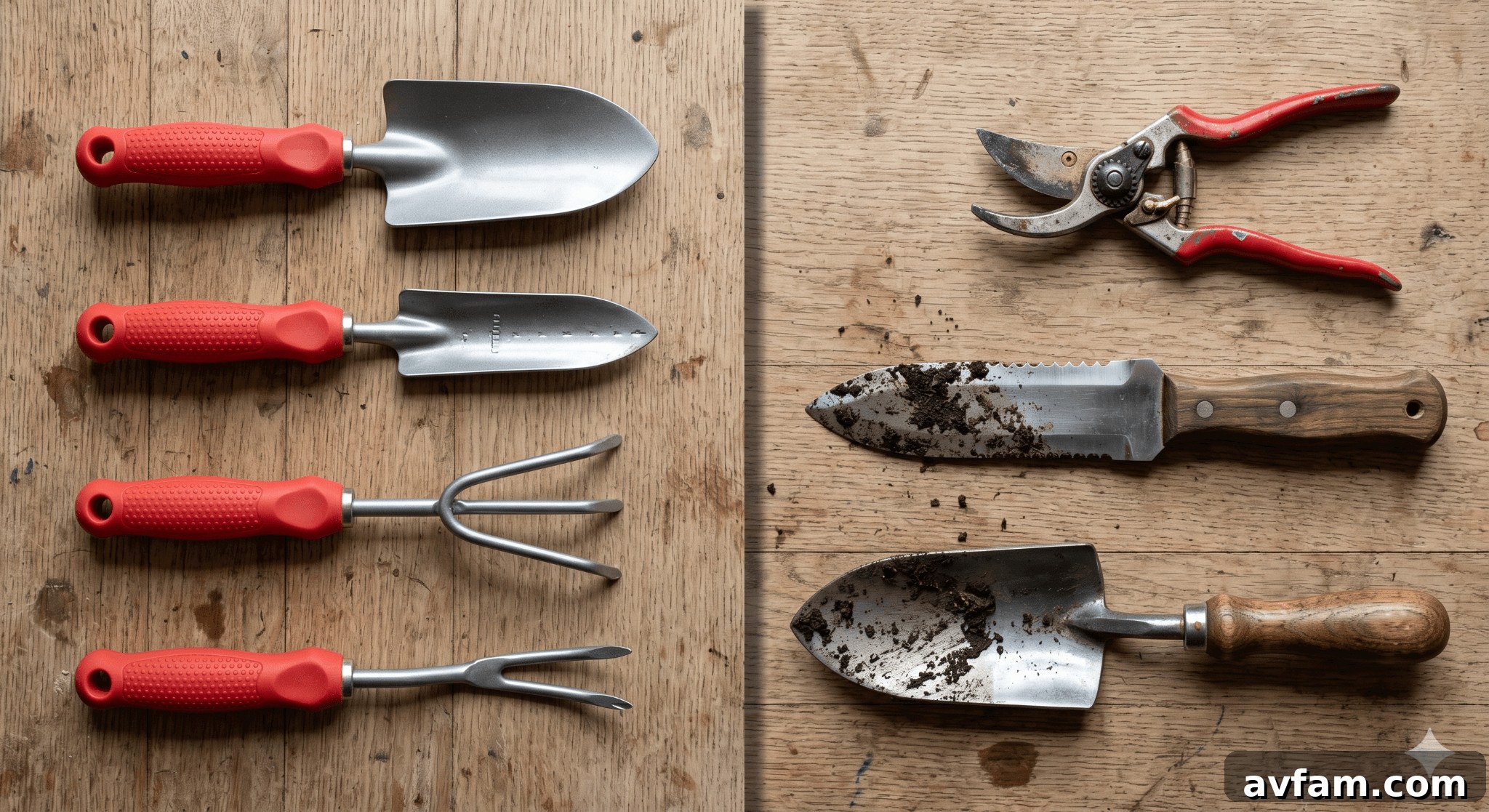
A solid tool set gets you a trowel, transplanter, cultivator, and weeder with matching grips and consistent quality. Sets can save money and remove decision fatigue—good for beginners and for gifts.
Buy individually if you already have a trowel and pruners
If you already own the basics, buying individual pieces avoids duplicates and lets you choose higher-quality cutting tools where it matters most.
The middle path that actually works
Buy a basic set for general hand tools, then upgrade cutting tools—pruners and loppers—individually. Cutting tools show quality in how plants fare; cheap cutters damage stems in ways that harm plant health.
A warning about “carrying case included”
Consider tool sets where the tools are the selling point, not the bag. Many sets lead with a canvas tote that falls apart; if the case is the highlight, the tools are probably mediocre.
Best Gardening Tools for Weekend Projects and Heavier Work
If your weekends include clearing brush, digging post holes, or breaking new ground, the core kit is a start but you’ll want heavier-duty gear.
A steel sledge for stubborn ground
A hefty sledge pairs with digging bars when setting posts or breaking compacted clay. It’s overkill for flower beds but essential for fence lines and heavy demolition.
A planting mattock
A mattock breaks tough soil and doubles as a hoe. In rocky or compacted ground it turns an impossible dig into a finishable job.
A backpack sprayer
For larger yards, a 3-gallon backpack sprayer saves time and reduces refills. Adjustable straps make hauling chemicals or water much easier than a hand pump.
A folding saw for branches and small trees
A folding pruning saw with an 8–10-inch razor tooth blade cuts cleanly through branches up to about 5 inches and folds for safe storage, outperforming many fixed-blade options.
A garden cart or wheelbarrow that will not rust
A quality wheelbarrow or poly garden cart with pneumatic tires is indispensable. Hauling mulch, compost, stones, and yard waste in a bucket quickly becomes tedious; a proper cart saves hours each season.
The Short Version
The best tools match your soil, session length, and storage. A core kit of eight tools—spade, trowel, pruners, lopper, weeder, leaf rake, bow rake, gloves—covers most needs. Add a garden cart and folding saw for larger yards. Spend on quality for cutting tools and your spade; mid-range gear is fine for most other items.
Brands to consider: Fiskars, Corona, and A.M. Leonard. Avoid sub-$20 “garden tool sets” and the marketing hype around gimmicky gadgets. The tools that still work in year ten are usually the ones that looked boring in the store.
A good tool outlasts the regret of buying cheap. Buy once, maintain it—sharpen blades, oil handles, hang tools properly—and you’ll still be using the same trowel a decade from now. Your future self will thank you for choosing well today.
Common Questions About Gardening Tools
Many searches begin as questions to voice assistants. Here are brief, practical answers to the most frequent queries.
What are the best gardening tools for a beginner?
Start with a hand trowel, bypass pruners, a digging spade, leather gloves, and a long-handle weeder. That five-tool starter kit covers most first-season tasks.
Who makes the best gardening tools?
Fiskars for ergonomics and engineering, Corona for durability and prosumer pricing, and A.M. Leonard for specialty and commercial-grade tools. Together they cover most home-gardening needs.
What is the difference between a spade and a shovel?
Spades have flat, rectangular blades for slicing and edging; shovels have curved blades for scooping and moving material. If you can have only one, buy a spade first.
What gardening tools are worth the money?
Prioritize pruners, loppers, and a digging spade. Cheap versions of these fail quickly and make tasks harder; mid-range tools are acceptable for most other implements.
How do I maintain gardening tools so they last?
Wipe blades clean after use, sharpen cutting tools at the start and mid-season, oil wooden handles annually, and store tools hanging or on a pegboard. Proper care prevents rust and extends service life.