

The living room is the center of daily life — where family gathers, guests are welcomed, and quiet afternoons are enjoyed. At the heart of that room sits the sofa, a piece of furniture that handles more daily use than almost anything else. Because it plays such a central role, choosing the right sofa deserves careful thought. A thoughtful selection pays off in comfort, durability, and a room that feels finished for years.

Start With How You Actually Live
Before considering color, pattern, or trim, begin with lifestyle. The demands on upholstery vary dramatically: a home with toddlers and pets needs fabrics and finishes designed for heavy wear and easy cleaning, while a solitary reading nook can prioritize delicate textiles and a softer silhouette. Think about daily routines: do you entertain frequently, or is the sofa mostly used for evenings and weekend relaxation? Do you work, eat, or nap on the couch? These practical questions narrow down shape, size, and fabric far more effectively than trends.
Once use is clear, address scale. A sofa that looks right in a large showroom can overwhelm a small apartment or appear insubstantial in an open-plan living area. Measure the room carefully, mark the intended footprint with tape, and account for traffic flow, window placement, and doorways. Planning for delivery paths and final placement avoids surprises and costly returns.
Explore different formats while shopping: compact loveseats suit small spaces, standard three-seat sofas work well in many rooms, and sectionals provide expansive seating for families or frequent hosts. Viewing several configurations side by side helps you compare proportions and seating capacity and decide which layout will best serve your living room.
Fabric, Frame, and Fill: What’s Underneath Matters
Upholstery color and texture are what you notice first, but the frame and cushion fill determine how a sofa performs over time. Frames made from kiln-dried hardwood resist warping and provide a durable foundation. Softer woods or particleboard reduce cost but usually shorten lifespan. Cushion construction matters too: high-resilience or high-density foams keep their shape longer than basic polyurethane, while feather-and-down blends offer a luxurious, soft surface that requires frequent fluffing to maintain appearance.
| Feature | Budget-Friendly Option | Mid-Range Option | Premium Option |
| Frame | Softwood/particleboard | Hardwood composite | Kiln-dried hardwood |
| Cushion fill | Standard foam | High-density foam | Foam-wrapped down |
| Upholstery | Polyester blend | Performance fabric | Top-grain leather |
| Expected lifespan | 3–5 years | 7–10 years | 15+ years |
| Typical price range | $300–$700 | $800–$1,800 | $2,000+ |
Fabric selection is equally important. Performance textiles labeled stain-resistant or pet-friendly combine easy maintenance with a comfortable feel, making them a smart choice for active households. Leather is durable and develops character with age, but it shows scratches more easily and carries a higher initial cost. Natural fibers like linen or silk offer an elegant look but are more prone to wrinkling and staining, so they suit lower-traffic, formal living spaces better.
Color, Shape, and the Room’s Overall Balance
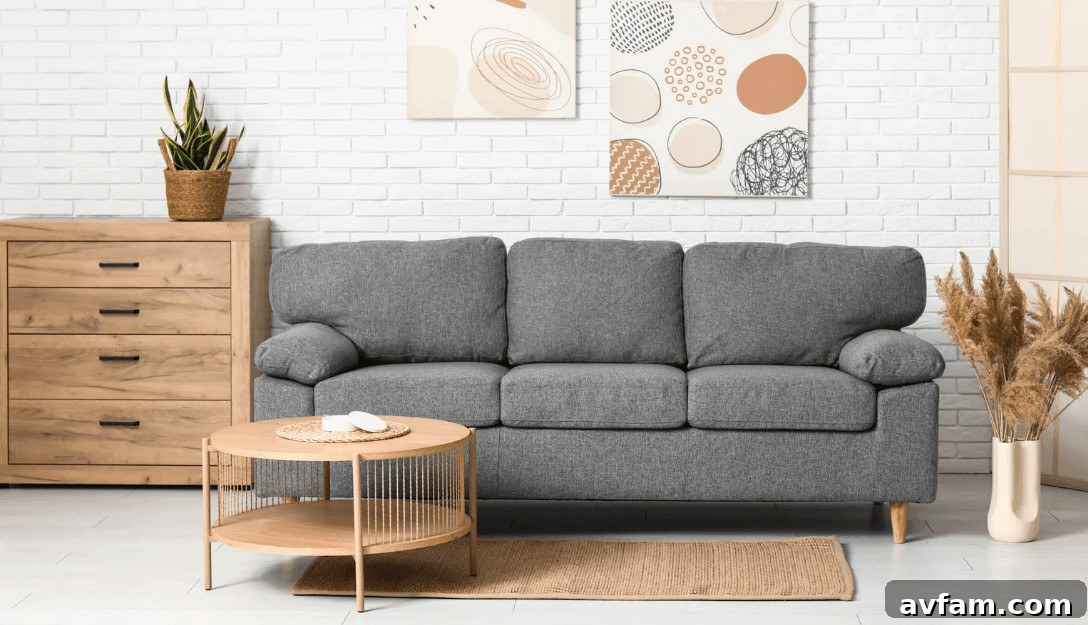
Color choices influence how long a sofa will remain visually relevant. Neutral colors such as gray, beige, and soft white adapt easily to changing décor and coordinate with a variety of accent colors. Choosing a bold hue can make the sofa the focal point and lend personality to the room, but it also limits versatility and often requires keeping the piece for many years to justify the commitment.
Form and silhouette matter just as much as color. Clean-lined track arms convey a modern, minimal aesthetic; rolled arms and tufted backs nod to tradition. Sectionals provide maximum seating and are ideal for open floor plans and households that regularly entertain, while a standard three-seat sofa combined with one or two accent chairs creates a balanced arrangement for smaller or more formal rooms.
A Simple Decision Framework
If the range of choices feels overwhelming, use this short checklist to guide the process:
- Define the primary use — daily lounging, formal entertaining, or flexible multi-purpose use.
- Measure the room carefully — include doorways, hallways, and the path for delivery.
- Set a realistic budget — think about expected lifespan and value, not just the price tag.
- Test comfort in person — firmness, seat depth, and support are hard to evaluate from photos alone.
- Match fabric to lifestyle — prioritize durable, easy-care textiles if you have children, pets, or heavy daily use.
Final Thoughts
A sofa is not typically an impulse buy; it influences how a living room looks, how comfortably people can gather, and how well the space endures everyday life. Taking time to consider how you live, what construction qualities you need, and how the piece will fit the room’s scale leads to a sofa that continues to feel right years later. Routine care and thoughtful fabric selection will keep upholstery looking its best through regular use.
For practical care, follow manufacturer recommendations for cleaning and maintenance and treat spills promptly. Choosing the right sofa initially reduces the need for frequent replacements and ensures the living room remains a welcoming, comfortable center of the home.