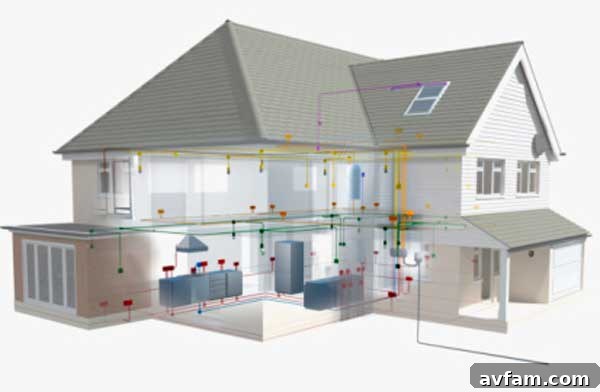

Our homes have been the stage for remarkable transformations throughout history. From the foundational shift to indoor plumbing, which dramatically improved hygiene and convenience, to the widespread adoption of electricity that powered countless innovations, and more recently, the ubiquitous presence of Wi-Fi connecting us globally – technology continually reshapes our domestic environments. These advancements haven’t just been incremental improvements; they’ve been genuine revolutions, fundamentally altering how we live, work, and interact within our personal spaces.
Today, we stand at the precipice of the next profound evolution in home technology, a paradigm shift known as the Internet of Things (IoT). But what exactly does this intricate phrase mean for the everyday homeowner? Imagine taking everything we currently categorize as ‘smart home products’ and elevating them to an entirely new echelon of intelligence and interconnectedness. Many of the smart devices we’re familiar with today operate as somewhat isolated units, proprietary within their specific functions. Consider a garage door that opens via a smartphone app or a security camera whose feed you can monitor on your device. While undeniably impressive and convenient, these often function as independent solutions to individual tasks. The IoT promises a much deeper integration, where devices don’t just respond to your commands but communicate with each other, anticipate your needs, and manage your home autonomously.
The true power of the Internet of Things lies in its ability to embed tiny sensors and connectivity modules into virtually any electronic appliance, tool, or object. These items can then be controlled, monitored, and even communicate with each other via a stable internet connection, often facilitated by existing Wi-Fi or Bluetooth networks. This concept opens up a vast realm of possibilities, many of which are already moving from science fiction into practical reality, promising unprecedented levels of convenience, efficiency, and comfort in our homes.
Embracing the Smart Kitchen Revolution with IoT
The kitchen, often considered the heart of the home, is ripe for transformation through the Internet of Things. Imagine a future where your essential kitchen appliances are not just powerful tools but intelligent partners in meal preparation and household management. Ovens, toasters, microwaves, ranges, and refrigerators are increasingly being designed with IoT capabilities, equipped with an array of sensors and connectivity features.
Consider the potential of a truly smart oven: one that doesn’t just bake or roast, but intelligently senses the internal temperature and doneness of your food. Once perfection is achieved, it automatically shuts off and sends a discreet notification directly to your smartphone or smartwatch. No more hovering near the kitchen, repeatedly opening the oven door, or straining to hear a distant buzzer. This level of automation ensures perfectly cooked meals every time, reduces energy waste from overcooking, and frees you to focus on other tasks or enjoy time with family.
The refrigerator, too, is evolving beyond mere cold storage. Imagine a smart refrigerator that scans the expiration dates of its contents, alerting you when items are nearing their spoil-by date, helping to significantly reduce food waste. Beyond just tracking freshness, these intelligent fridges can monitor inventory levels, notifying you when milk is low, eggs are running out, or your favorite condiments need replenishing. Some advanced models can even suggest recipes based on available ingredients or automatically add items to your digital grocery list, and in some cases, even place orders with your preferred grocery delivery service.
Beyond these major appliances, the kitchen’s smaller gadgets are also joining the network. Smart toasters can remember your preferred level of crispiness, while connected coffee makers can brew your morning cup exactly when you wake up, or even learn your daily routine and have a fresh pot ready without a single prompt. Even smart scales can connect to health apps, providing seamless tracking of dietary intake. This revolution is truly at the micro-level, integrating intelligence into every corner of your culinary space, making cooking and meal management not just easier, but smarter and more efficient.

Expanding Intelligence: IoT Beyond the Kitchen
While the kitchen offers compelling examples, the scope of the Internet of Things extends far beyond. The entire home environment is poised for an unprecedented level of connectivity and automation, enhancing every aspect of our daily lives.
Smart Entertainment and Ambiance
Companies like Sonos have already set a high bar for home audio, offering multi-room sound systems that deliver seamless music experiences throughout the house. But IoT takes this further. Imagine smart lighting systems that adapt to your mood, time of day, or even external weather conditions, creating perfect ambiance with minimal effort. Integrated with smart blinds or curtains, your living space can automatically adjust lighting and privacy, optimizing natural light and energy efficiency. Smart TVs and projectors can become central hubs, not just for entertainment, but for interacting with other smart devices, displaying security camera feeds, or managing your calendar.
Enhanced Home Security and Safety
The realm of home security has been dramatically advanced by connected devices. Smart doorbells with integrated cameras and two-way audio allow you to see and speak to visitors from anywhere in the world. Smart locks offer keyless entry, grant temporary access to guests or service providers, and log entry and exit times. Beyond these, a comprehensive IoT security system includes motion sensors, window and door sensors, and even glass-break detectors, all communicating to a central hub that can alert you and emergency services instantly. Furthermore, IoT extends to safety with smart smoke and carbon monoxide detectors that not only sound an alarm but also notify your phone and emergency contacts, even if you’re not home. Leak detectors can prevent costly water damage by alerting you to a pipe burst or overflowing tub, while smart air quality monitors can track pollutants, allergens, and even CO2 levels, ensuring a healthier indoor environment.
Optimized Climate Control and Energy Management
Smart thermostats, pioneered by innovators like Nest, have revolutionized how we manage home heating and cooling. These devices learn your preferences and schedule, optimizing energy usage and reducing utility bills. With geofencing capabilities, they can even know when you’re leaving or arriving, adjusting temperatures accordingly. But the IoT potential for energy goes deeper. Smart plugs allow you to monitor and control the energy consumption of individual appliances, identifying energy vampires and turning them off remotely. Integrating with smart home energy management systems, IoT can even prioritize appliance usage during off-peak hours or optimize solar panel output and electric vehicle charging, moving us towards truly sustainable living.
Personalized Health and Wellness
The bedroom, a sanctuary of rest, can become a hub for personalized wellness. Smart beds can track sleep patterns, adjust firmness for optimal comfort, and even gently wake you up at the ideal point in your sleep cycle. Smart mirrors in bathrooms can display news, weather, and health data while you get ready, or provide personalized skincare analysis. Even connected scales and health monitors can seamlessly upload data to your fitness apps, giving you a holistic view of your health.
Outdoor and Garden Automation
The IoT doesn’t stop at your doorstep. Smart irrigation systems can monitor local weather forecasts and soil moisture levels, watering your garden only when needed, conserving precious water resources. Robotic lawnmowers can maintain your yard with minimal effort, controlled and scheduled from your smartphone. Outdoor smart lighting can provide security and ambiance, turning on automatically as you approach or adjusting intensity based on natural light levels.
Challenges and the Path Forward
While the promise of IoT is immense, its widespread adoption also presents certain challenges. Interoperability remains a key hurdle; ensuring devices from different manufacturers and ecosystems can seamlessly communicate with each other is crucial for a truly integrated smart home. Security and privacy are paramount concerns, as our homes become increasingly digitized, protecting personal data and preventing unauthorized access becomes vital. Manufacturers and industry standards bodies are working tirelessly to address these issues, implementing robust encryption and secure protocols.
The initial cost of outfitting a home with IoT devices can also be a barrier for some, though prices are steadily decreasing as technology matures. Finally, the complexity of setting up and managing multiple connected devices can be daunting for non-tech-savvy users, highlighting the need for more intuitive interfaces and simplified installation processes.
The Future is Now: A Seamlessly Connected Home
As products like Nest and Dropcam continue to push boundaries, the world of home appliances has truly awoken to the transformative future that connected devices offer. The vision is one where our homes are no longer passive structures but active participants in our lives, anticipating our needs, adapting to our preferences, and taking care of routine tasks with minimal human intervention. Artificial intelligence and machine learning will play increasingly significant roles, allowing devices to learn from our habits and make predictive decisions, creating a truly autonomous and personalized living environment.
We are incredibly excited to witness and share the latest advancements in smart home technologies and the evolving landscape of the Internet of Things. The future of our homes promises unparalleled convenience, enhanced security, greater energy efficiency, and a quality of life that was once only dreamed of. The connected smart home is not just a collection of gadgets; it’s a fundamental reimagining of our living spaces, making them more intelligent, responsive, and ultimately, more comfortable and fulfilling than ever before.