
Unlocking Longevity: The Ultimate Guide to Maintaining Your High-Mileage Vehicle with Smart Oil Changes
For many car owners, reaching the 100,000-mile mark is a significant milestone, often prompting thoughts of trading in their beloved vehicle. However, the truth is, most modern cars are engineered to perform reliably far beyond that number, often reaching 200,000 miles or even more with the right care. The secret to extending your vehicle’s lifespan and ensuring it remains a dependable companion on the road lies in diligent, proactive maintenance. Among all maintenance tasks, regular oil changes stand out as perhaps the most crucial, directly impacting engine health, performance, and overall longevity.
My personal experience with a 2008 Ford F-150 is a testament to this philosophy. This rugged pickup truck has faithfully served me for years, currently boasting an impressive 170,000 miles on its odometer. Despite its age and high mileage, it continues to run remarkably smoothly and trouble-free, a performance I largely attribute to a consistent regimen of do-it-yourself oil changes. By taking the initiative to perform this essential maintenance myself, I’ve been able to ensure it receives high-quality oil and premium filters at regular intervals, tailored to its needs.
Understanding the intricacies of an oil change, especially for a high-mileage vehicle, can empower you to take better care of your car and potentially save on costly repairs down the line. To guide you through the process, I’ve put together a comprehensive video. In this visual walkthrough, I demonstrate the step-by-step procedure for changing the oil in my Ford F-150, emphasizing not just the ‘how’ but also the ‘why’ behind choosing a premium oil filter that can significantly extend your engine’s life.
Why Regular Oil Changes Are Non-Negotiable for High-Mileage Engines
Engine oil is the lifeblood of your vehicle. It performs several critical functions that keep your engine running efficiently and prevent premature wear:
- Lubrication: Oil reduces friction between moving parts, preventing wear and heat buildup. Without adequate lubrication, metal-on-metal contact can quickly lead to catastrophic engine damage.
- Cooling: As oil circulates, it absorbs heat from engine components, helping to dissipate it and maintain optimal operating temperatures.
- Cleaning: Oil picks up dirt, sludge, and microscopic metal particles generated during combustion and normal engine operation. It carries these contaminants to the oil filter, preventing them from circulating and causing damage.
- Sealing: Oil helps create a seal between the piston rings and cylinder walls, which is crucial for maintaining proper compression and power output.
- Corrosion Protection: Modern oils contain additives that protect engine components from rust and corrosion.
Over time, oil breaks down due to heat and contamination. Its lubricating properties diminish, and its ability to clean and protect weakens. For high-mileage vehicles, these effects are even more pronounced as engine tolerances may be slightly looser, and internal wear is naturally greater. Skipping oil changes or extending them too long can lead to sludge buildup, increased friction, overheating, and ultimately, severe engine damage that could effectively end your vehicle’s life.
Embracing the Power of Full Synthetic Oil
The type of oil you choose for your vehicle plays a significant role in its performance and lifespan, especially for high-mileage engines. While conventional oils have served us well for decades, full synthetic oils offer superior protection and performance that are particularly beneficial for vehicles with many miles on the clock.
I exclusively use full synthetic oil in all my vehicles, and for good reason. Full synthetic oils are engineered to provide enhanced performance across a wider range of temperatures, from extreme cold starts to the high heat generated during demanding driving conditions. They flow more easily in cold weather, ensuring vital engine parts are lubricated quickly upon startup, and they maintain their viscosity and protective qualities even under intense heat, resisting breakdown and oxidation far better than conventional oils.
One of the most notable advantages of full synthetic oil is its extended drain interval. The outdated recommendation of changing your oil every 3,000 or 5,000 miles largely pertains to conventional oils. With high-quality full synthetic oils, manufacturers often recommend intervals of 10,000, 15,000 miles, or even longer. Personally, I opt for a conservative approach, changing my full synthetic oil around every 7,500 miles. While this is still well within the typical recommendations for synthetic oils, it gives me added peace of mind and ensures my engine receives fresh lubrication before it truly needs it, optimizing its protection and performance for the long haul.
For high-mileage vehicles, where engine components have experienced years of wear and tear, the enhanced film strength and cleaning additives in synthetic oil provide an extra layer of defense against further degradation, helping to keep older engines running smoothly and efficiently.
The Unsung Hero: Choosing a Premium Oil Filter
While the quality of your engine oil is paramount, it’s only half the equation. The oil filter works in tandem with the oil, trapping contaminants and preventing them from circulating through your engine. A high-quality oil filter is just as crucial as the oil itself, particularly when you’re using long-life synthetic oils.
It’s counterproductive to invest in a premium full synthetic oil that’s rated for 10,000 or 15,000 miles if your oil filter can only effectively perform for half that duration. A substandard filter can clog prematurely, reducing oil flow and potentially causing dirty oil to bypass the filter and circulate through your engine, defeating the purpose of your expensive synthetic oil and compromising engine protection.
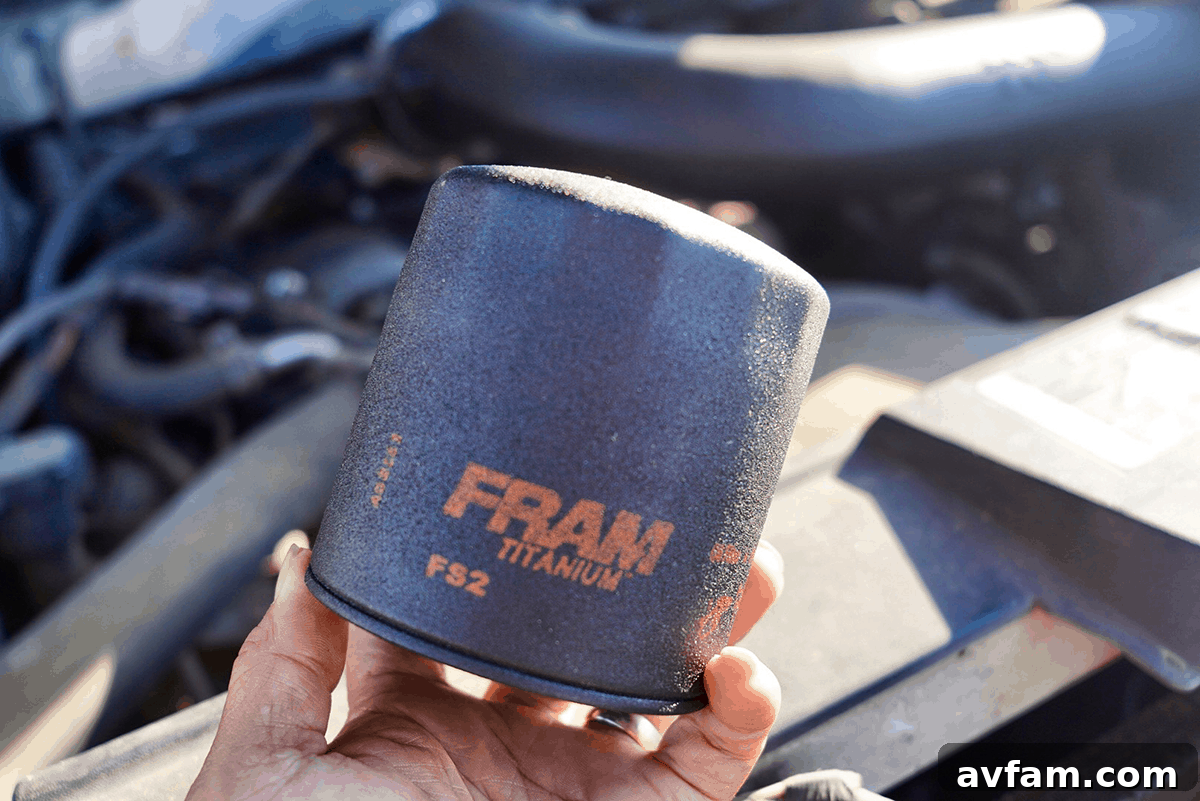
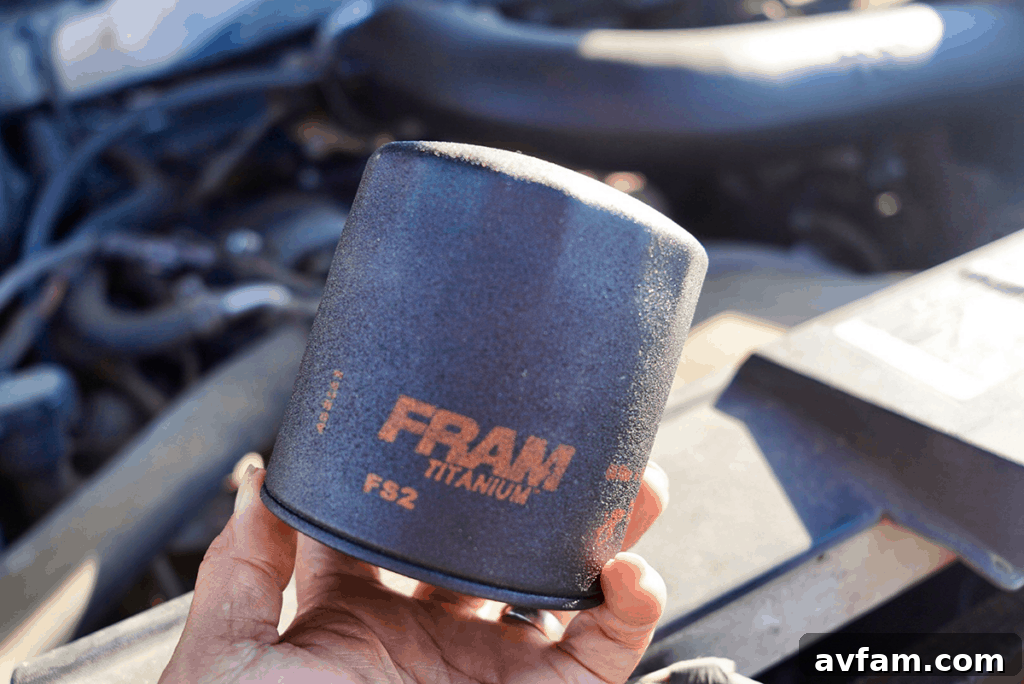
This is precisely why I collaborated with FRAM filters and chose the FRAM Titanium oil filter for my F-150. This filter is specifically engineered to match the extended life cycles of modern synthetic oils, boasting an impressive rating of up to 20,000 miles. The FRAM Titanium filter utilizes advanced synthetic media designed for superior dirt-holding capacity and filtering efficiency, ensuring that your oil remains clean and your engine protected for the entire duration of your extended oil change interval. Investing in a filter of this caliber means you don’t have to compromise on protection, allowing your premium synthetic oil to deliver its full benefits.
Mastering the DIY Oil Change: A Step-by-Step Overview
Performing your own oil change is not only a cost-effective solution but also gives you a deeper understanding of your vehicle’s mechanics. It’s a rewarding experience that puts you in direct control of your engine’s health. While specific steps can vary slightly by vehicle, the general process remains consistent:
- Gather Your Tools and Materials: You’ll need new oil (full synthetic, correct viscosity for your vehicle), a new oil filter (like the FRAM Titanium), an oil filter wrench, a socket wrench, a drain pan, funnel, rags, and safety equipment (gloves, safety glasses, jack stands if lifting the vehicle).
- Safety First: Always work on a level surface. If you need to raise your vehicle, use a sturdy jack and always secure it with jack stands. Never rely solely on a jack. Ensure the engine is warm but not hot (run for a few minutes to circulate oil).
- Locate the Drain Plug: Find the oil pan underneath your vehicle and the drain plug. Place your drain pan directly underneath it.
- Drain the Old Oil: Carefully loosen the drain plug with your socket wrench. Once it’s loose, swiftly remove it by hand, allowing the old oil to flow into the drain pan. Let it drain completely.
- Replace the Drain Plug: Once the oil stops draining, clean around the drain plug opening and reinstall the drain plug, tightening it securely but not excessively. Replace the crush washer if necessary.
- Remove the Old Oil Filter: Locate the oil filter. It’s usually a cylindrical canister. Use an oil filter wrench to loosen it, then remove it by hand. Be prepared for a small amount of oil to spill from the filter.
- Prepare and Install the New Filter: Apply a thin film of new oil to the rubber gasket of your new FRAM Titanium filter. This ensures a good seal. Screw the new filter on by hand until the gasket makes contact, then tighten it another 3/4 to one full turn. Do not overtighten.
- Add New Engine Oil: Place a funnel in the engine’s oil filler cap opening. Slowly pour in the recommended amount of new synthetic oil, checking your vehicle’s owner’s manual for the exact capacity.
- Check Oil Level: After adding the oil, reinstall the filler cap. Start the engine and let it run for a minute or two to circulate the new oil. Then, turn off the engine and wait a few minutes for the oil to settle. Check the dipstick, adding more oil if necessary until it reaches the “full” mark.
- Proper Disposal: Never pour used oil down the drain. Collect the old oil in a sealed container and take it to an auto parts store, service station, or local recycling center that accepts used motor oil.
By following these steps, you can confidently perform your own oil change and give your high-mileage vehicle the care it deserves. Remember, the video linked above provides an excellent visual demonstration specific to my Ford F-150, offering even more clarity.
Beyond Oil Changes: A Holistic Approach to High-Mileage Vehicle Care
While oil changes are paramount, they are just one component of a comprehensive maintenance strategy for a high-mileage vehicle. To truly maximize your car’s lifespan and reliability, consider these additional crucial steps:
- Regular Fluid Checks: Beyond engine oil, regularly inspect and top off or change transmission fluid, brake fluid, power steering fluid, and coolant. These fluids are vital for various systems.
- Tire Maintenance: Rotate your tires regularly and maintain proper inflation pressure. This ensures even wear, extends tire life, and improves fuel efficiency and safety.
- Brake Inspection: Routinely check brake pads, rotors, and fluid levels. Worn brakes compromise safety and can lead to more expensive repairs if neglected.
- Belt and Hose Inspection: Inspect all belts for cracks or fraying and hoses for bulges, leaks, or hardness. Replacing these components before they fail can prevent roadside breakdowns.
- Spark Plug Replacement: Consult your owner’s manual for recommended intervals. Fresh spark plugs ensure efficient combustion, better fuel economy, and smooth engine performance.
- Air Filter Replacement: A clean engine air filter ensures proper airflow to the engine, improving performance and fuel efficiency. Replace cabin air filters for better interior air quality.
- Listen to Your Vehicle: Pay attention to any new noises, smells, or changes in driving feel. Addressing small issues promptly can prevent them from escalating into major problems.
Conclusion: Invest in Your Vehicle’s Future
Your vehicle is a significant investment, and extending its life means protecting that investment. As my 2008 Ford F-150 with 170,000 miles proudly demonstrates, a high-mileage vehicle doesn’t have to be a liability. With a commitment to regular, quality maintenance, particularly focusing on using full synthetic oil and a premium, long-lasting filter like the FRAM Titanium, you can ensure your car continues to run efficiently and reliably for many more miles to come. Don’t underestimate the power of proactive care; it’s the key to unlocking true longevity and dependable performance from your beloved vehicle.