
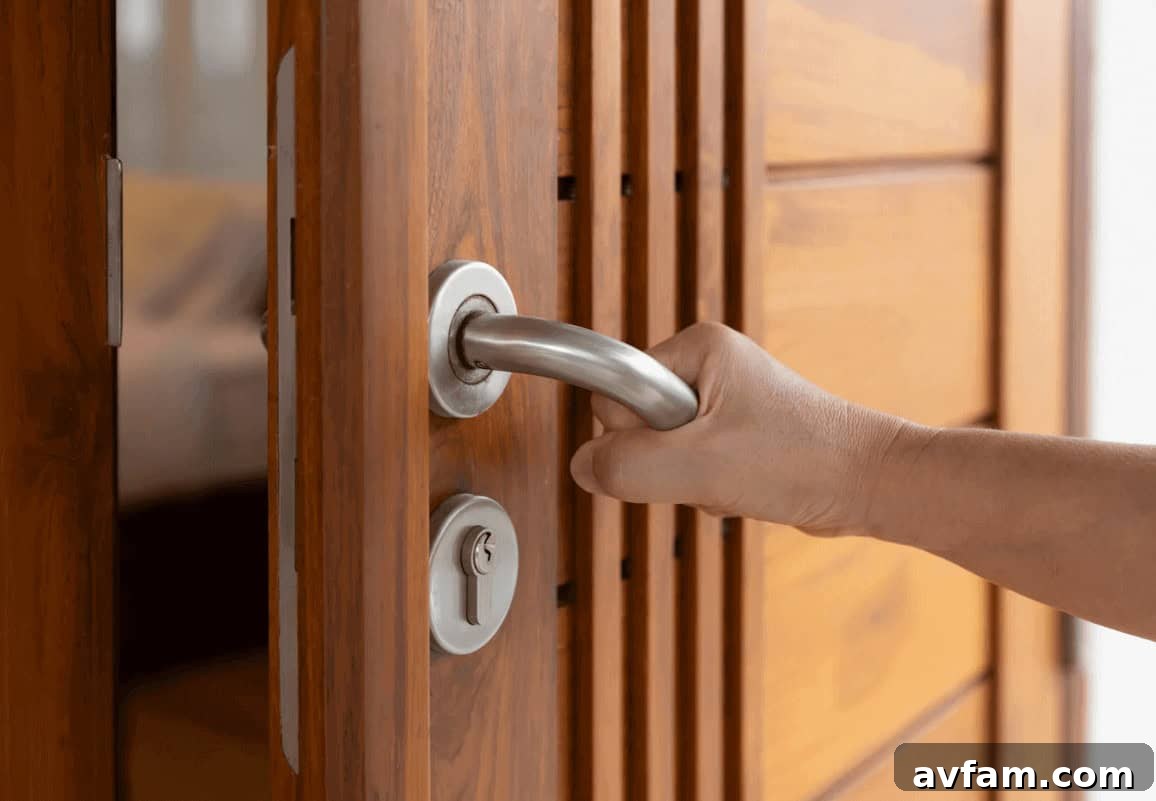
Replacing an exterior door is far more than a simple aesthetic upgrade; it’s a strategic investment in the long-term security, energy efficiency, and overall durability of your home. While many homeowners initially focus on appearance and price, the true value and performance of a new door are determined by its underlying features. A well-chosen door can significantly enhance your home’s protection against intruders, reduce energy bills, and withstand the elements for decades. Conversely, a poorly specified door, even if visually appealing, can compromise security, offer inadequate insulation, and lead to premature wear and costly repairs down the line.
Understanding the critical features to prioritize during the door replacement process ensures your investment yields genuine improvements and avoids common, expensive pitfalls. This comprehensive guide will delve into the essential aspects to evaluate: the door’s structural strength, advanced security hardware, superior insulation performance, appropriate material choices, and the paramount importance of professional installation quality. By the end of this article, you will be equipped with the knowledge to ask informed questions and confidently select a door that delivers lasting security, comfort, and value.
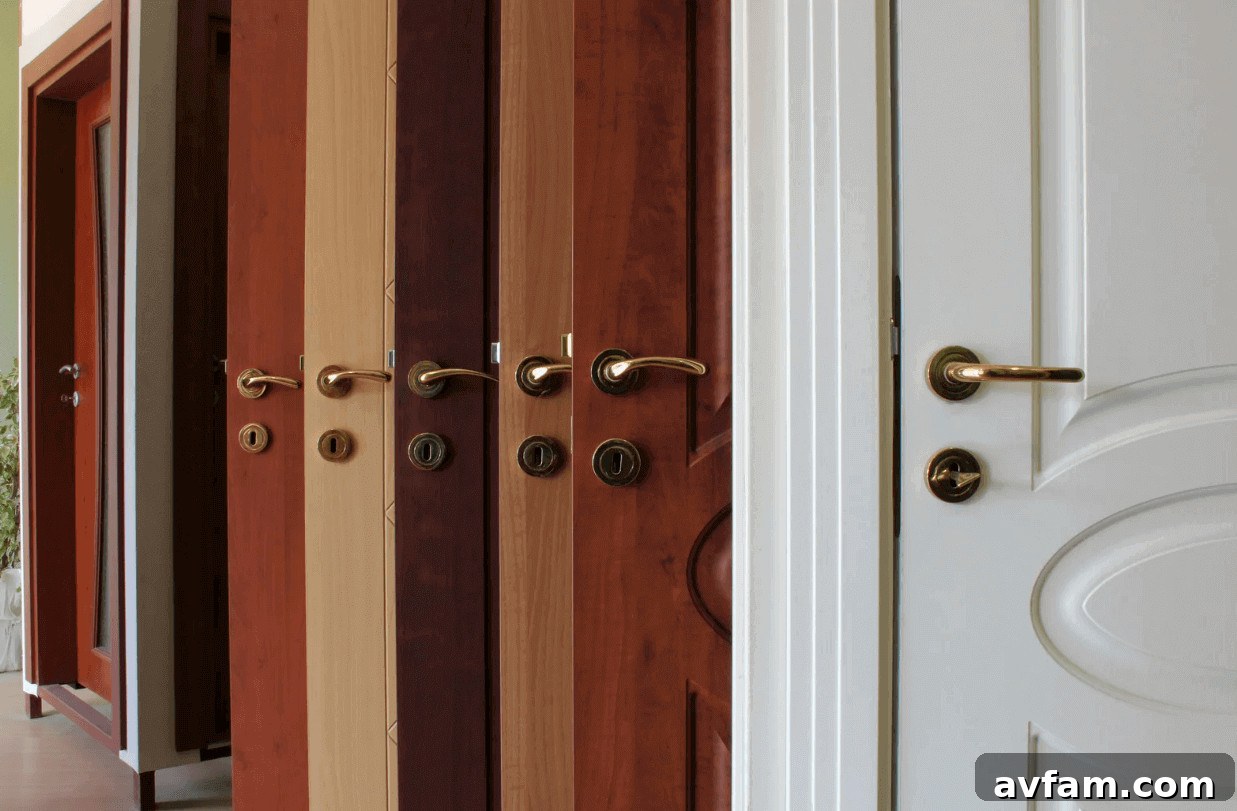
The Foundation of Security: Prioritizing Structural Strength
The core of any high-performing door lies in its internal structure. This is often where homeowners make critical mistakes, basing their decisions on superficial appearance without understanding the vital components hidden beneath the surface. True security and durability are built from the inside out, making the door’s core material and construction methods paramount.
Solid Core vs. Hollow Core: A Critical Distinction for Exterior Doors
Understanding the difference between door core types is fundamental to selecting the right door for its intended purpose:
-
Hollow-Core Doors: These doors are lightweight, typically consisting of a wood frame with cardboard or plastic honeycomb filling, covered by thin plywood or fiberboard skins. While they are inexpensive and perfectly suitable for low-traffic interior areas where privacy and basic sound dampening are sufficient, they offer minimal security. A hollow-core exterior door can be easily breached with little effort, providing virtually no resistance against forced entry. They also offer poor sound and thermal insulation.
-
Solid Timber Cores: Crafted from solid wood, these doors boast excellent structural strength and a classic aesthetic appeal. They provide significant resistance to impacts and good sound insulation. However, solid timber requires consistent maintenance, including regular painting or sealing, to protect against moisture and prevent warping or rotting, especially in fluctuating climates. While durable, they demand a notable commitment to upkeep.
-
Insulated Composite Cores: Representing a modern advancement, composite doors often feature a rigid foam core (such as polyurethane or polystyrene) integrated within a robust timber or engineered wood frame, all encapsulated by durable outer skins. This sophisticated construction offers a harmonious blend of benefits:
- Superior Thermal Insulation: The rigid foam provides excellent R-values, making these doors highly energy-efficient and crucial for reducing heating and cooling costs.
- Exceptional Structural Strength: They resist warping, twisting, and bowing much better than solid timber, maintaining their integrity over time.
- Manageable Weight: Lighter than solid timber but significantly more robust than hollow cores, making them easier to operate while still providing substantial security.
- Minimal Maintenance: Their durable outer skins, often made from GRP (Glass Reinforced Plastic) or other engineered materials, require very little upkeep beyond occasional cleaning.
-
Steel-Reinforced Cores: For applications where maximum security is non-negotiable, steel-reinforced doors are the ultimate choice. These incorporate steel plates or mesh within the core construction, dramatically boosting impact resistance and making forced entry extremely difficult. While heavier and typically more expensive, they offer unmatched structural integrity and peace of mind for high-security residential or commercial needs.
For any external door, or indeed any application where security, durability, and energy efficiency are priorities, selecting a solid core, insulated composite, or steel-reinforced construction is absolutely essential. The internal structure is the true determinant of whether your door genuinely protects your home or merely provides a superficial appearance of security.
The Impact of Door Thickness on Performance
Beyond the core material, the overall thickness of your door plays a pivotal role in its performance:
- Standard Internal Doors: Typically measure around 35mm (1 3/8 inches) thick, which is adequate for interior separation but wholly insufficient for exterior protection.
- Standard Exterior Doors: Generally start at 44mm (1 3/4 inches) thick. This provides a reasonable balance of strength and insulation for many homes.
- High-Security & Energy-Efficient Doors: Modern, security-focused replacements often feature thicknesses ranging from 45mm to an impressive 70mm (2 3/4 inches).
Why does door thickness matter so significantly? Thicker doors offer several critical advantages:
- Enhanced Structural Rigidity: Greater thickness translates to superior resistance against flexing, bending, and deflection under impact or attempted forced entry.
- Accommodates Heavy-Duty Hardware: Thicker doors can house more robust and complex locking systems, hinges, and reinforcements without compromising the door’s structural integrity. This means better support for multi-point locks and stronger hinge attachments.
- Improved Thermal Resistance: More material, especially an insulated core, inherently provides better thermal resistance. A 44mm insulated composite door will significantly outperform a 35mm door in both security and energy efficiency, and a 50mm+ door will offer even greater benefits.
When replacing an external door, 44mm should be considered the absolute minimum specification. For those prioritizing advanced security and optimal energy savings, a door thickness of 50mm or greater will provide measurable and tangible benefits in forced-entry resistance and thermal performance, ultimately enhancing your home’s comfort and safety.
Deciphering Key Door Components for Informed Decisions
During the door replacement process, you’ll encounter various technical terms related to door construction. Familiarity with these components is crucial for making informed choices, understanding specification documents, and identifying potential issues during installation. Here’s a breakdown of the key elements:
-
Stiles: These are the vertical structural members that form the sides of the door leaf (the main panel). They bear the door’s weight, support the hinges on one side, and house the locking mechanism on the other. Strong, solid stiles are fundamental to the door’s stability and security.
-
Rails: Horizontal structural members located at the top and bottom of the door leaf, and sometimes in the middle (mid-rails) for panel doors. Rails provide crucial lateral strength, preventing the door from racking or twisting, and connecting the stiles securely.
-
The Door Leaf: This is the main, movable panel of the door that swings open and closed. It encompasses the core material, stiles, rails, and outer skins, and is the primary barrier between your home and the outside world.
-
The Threshold: A horizontal element positioned at the very bottom of the doorway, integrated into the frame opening. The threshold serves multiple vital functions: it bridges the slight height difference between indoor and outdoor floor levels, provides a weather-tight seal against drafts and water ingress, and offers a durable surface for foot traffic. High-quality thresholds are crucial for energy efficiency and preventing moisture damage.
-
The Frame: This is the fixed, structural assembly that surrounds the door opening and supports the door leaf. Its strength is paramount but frequently overlooked. A robust door is only as secure as its frame; a weak or poorly installed frame cannot effectively support security hardware, no matter how strong the door itself. Frame materials vary (solid timber, steel, composite), and often require reinforcement, especially at lock points, to ensure overall security and longevity.
-
Architrave: The decorative trim that surrounds the door frame, covering the gap between the frame and the wall. While primarily aesthetic, it contributes to the finished look of the doorway.
-
Hinges: These mechanical devices support the door’s weight and facilitate its smooth rotation. For exterior doors, heavy-duty hinges are essential, and security hinges, which incorporate anti-lift bolts or concealed pins, provide an additional layer of protection by preventing the door from being removed even if the hinge pins are tampered with.
-
The Lock Cylinder (or Barrel): This is the part of the locking mechanism where the key is inserted. It contains the pins that align with the key’s bitting, allowing the cylinder to rotate and activate the lock. Crucially, specify anti-snap cylinders, which are designed to resist a common burglar technique where the cylinder is broken off to gain access to the locking mechanism.
Having a clear understanding of these terms will empower you to engage in more informed discussions with installers, accurately interpret specification documents, and ensure every component contributes to the overall security, efficiency, and durability of your new door. For further in-depth knowledge, resources like specialized locksmith or door manufacturer blogs often provide detailed visual guides to door part terminology.
Non-Negotiable Security Features for Your Exterior Door
The security of an exterior door is not reliant on a single component but rather a harmonious system of integrated features working in concert. Overlooking any of these critical elements can create a vulnerability that compromises the entire installation.
Multi-Point Locking Systems: Beyond the Single Deadbolt
Relying solely on a single, central deadbolt for an external door is no longer sufficient by modern security standards. Multi-point locking systems are the benchmark for secure exterior doors because they distribute locking force across the entire height of the door, significantly enhancing resistance to forced entry. These systems typically feature:
- A robust central lock (the primary deadbolt).
- Additional locking bolts (often hook bolts or roller cams) at the top and bottom of the door, engaging with the frame.
- Sometimes, supplementary locks in the middle, creating a 3-point, 5-point, or even 7-point locking mechanism.
This widespread distribution of locking points means that an intruder attempting to force the door open must overcome resistance at multiple locations simultaneously. This dramatically increases the effort, noise, and time required, making a successful breach far less likely. Multi-point locking systems are now standard on all quality exterior doors and should be considered a non-negotiable feature for any new installation.
Within the locking system, the choice of cylinder is paramount. Always specify anti-snap cylinders. Standard lock cylinders can be easily ‘snapped’ by applying a sharp striking force, allowing an intruder to bypass the lock mechanism. Anti-snap cylinders are engineered with internal mechanisms that prevent extraction or manipulation, even when subjected to significant impact, thereby resisting one of the most common forced-entry techniques.
Reinforced Frames: The Unsung Hero of Door Security
This is where many security discussions fall short: even the most formidable, high-security door becomes vulnerable if it’s attached to a weak or flimsy frame. A fortress-like door anchored to an inadequate frame is only as strong as its weakest link – the frame itself. Frame reinforcement is absolutely critical and includes:
- Solid Wood or Composite Frame Construction: Avoid lightweight, hollow casings. Frames should be constructed from dense, solid materials that can withstand significant force.
- Steel or Concrete Reinforcement at Lock Points: The areas where the multi-point locks engage with the frame are critical stress points. These should be specifically reinforced with robust materials like steel plates or embedded concrete to prevent the locks from tearing out of the frame under pressure.
- Proper Anchoring into Structural Openings: The frame must be securely and deeply anchored into the surrounding structural walls (brick, concrete, or timber studs) using appropriate, heavy-duty fixings.
A frequent and costly mistake is installing a high-specification, 70mm thick security door into a standard, lightweight, unreinforced timber frame. When force is applied to the door, the robust locking hardware will pull directly on the weak frame, leading to lock points tearing out, the frame splitting, or the entire assembly flexing excessively. Professional assessment of your existing frame and, if necessary, its replacement or substantial reinforcement during installation, is an essential step to ensure your door’s locking system performs as designed.
Hinges and Hinge Bolts: Securing the Often-Overlooked Side
The hinge side of a door is often overlooked but represents a significant potential vulnerability. Standard hinges, particularly those with exposed pins, can be compromised if an intruder attempts to pry the door open from that side or remove the hinge pins. To counteract this, security hinges are indispensable:
- Anti-Lift Bolts (Dog Bolts): These are small, robust bolts or studs located on the hinge side of the door leaf that engage with corresponding recesses in the door frame when the door is closed. Even if the hinge pins are removed or the hinges are otherwise compromised, the anti-lift bolts prevent the door from being lifted off its frame.
- Concealed or Protected Pin Designs: Some security hinges are designed with pins that are not easily accessible or removable from the outside, adding another layer of protection.
- Heavy-Duty Construction: Security hinges are built to support the full weight of the door, often made from hardened steel, ensuring they withstand significant force.
During the door replacement process, always specify security hinges that are robust enough for your door’s weight class and incorporate anti-tamper features. This crucial detail ensures comprehensive security against a wide range of attack methods.
Maximizing Comfort and Savings: Energy Efficiency & Weather Protection
A new door replacement offers an unparalleled opportunity to significantly enhance your home’s energy efficiency, reduce utility bills, and improve overall indoor comfort. This goes beyond just the door itself, extending to the quality of its seals and the thermal integrity of its frame.
Insulated Core Materials: The Heart of Thermal Performance
The core material of your door is the primary determinant of its thermal performance. Investing in superior insulation will pay dividends in reduced heating and cooling costs over the lifespan of the door:
-
Polyurethane Foam Cores: Widely regarded as one of the most effective insulating materials for doors, polyurethane foam offers exceptionally high R-values (a measure of thermal resistance). These cores are highly resistant to moisture absorption, ensuring their insulating properties remain consistent and effective for decades. They form a dense barrier against heat transfer, keeping your home warmer in winter and cooler in summer.
-
Thermal Break Systems: High-performance composite and metal frames often incorporate “thermal breaks.” These are insulating layers (typically made from a non-conductive material like polyamide) strategically placed within the frame’s structure. Their purpose is to interrupt the path of heat transfer through the frame material itself, preventing cold bridging (where heat bypasses the door’s insulation by traveling directly through the conductive frame). This ensures the entire doorway assembly contributes to energy efficiency, not just the door leaf.
When evaluating energy efficiency, a key metric to look for is the U-value. This measures the rate of heat loss through a material or assembly. A lower U-value indicates better insulation and less heat loss. Modern, well-insulated exterior doors can achieve impressive U-values, often ranging from 0.18 to 0.22 W/(m²·K). This performance can be three times better than older, uninsulated doors, leading to substantial energy savings.
For homes in climates with significant heating or cooling demands, the initial investment in a properly insulated door is quickly recouped through lower energy bills and a noticeably more comfortable indoor environment, free from drafts and temperature fluctuations near the entrance.
Weather Seals and Threshold Systems: The Unseen Barriers
Even the most highly insulated door will fail to perform optimally if there are gaps that allow air and moisture infiltration. This is where high-quality weather seals and threshold systems become critical:
-
Compression Seals (Weatherstripping): These flexible seals, typically made from durable rubber or foam, are installed around the perimeter of the door leaf and/or frame. When the door closes, these seals are compressed, creating a tight, airtight, and watertight barrier. It’s important to select doors with high-quality, long-lasting compression seals that are also replaceable, as they will degrade over time due to wear and exposure. Evaluate how easily these seals can be maintained or replaced during the lifespan of your door.
-
Bottom Sweeps and Threshold Systems: The interface between the bottom of the door and the threshold is a common point for air and water leakage. Effective solutions include:
- Door Sweeps: Flexible strips attached to the bottom of the door that brush against the threshold when closed, creating a seal.
- Automatic Drop Seals: These sophisticated seals automatically drop down to create a tight seal when the door is closed and retract when it’s opened, minimizing friction and wear.
- Modern Low-Profile Thresholds: These systems are designed to accommodate accessibility requirements while still providing robust weather sealing. They often integrate multiple chambers and drainage channels to prevent water ingress and air infiltration.
Another often-overlooked aspect during replacement is cold bridging around the frames. If the door frame is installed directly against external walls without appropriate thermal break materials or insulation, heat can escape or enter through the frame itself, regardless of how well insulated the door leaf is. High-performance door replacement installations include thermal breaks within the frame construction or careful insulation around the frame cavity to ensure a complete thermal envelope and maximum energy efficiency.
Material Matters, But Construction Matters More
The choice of door material significantly influences its aesthetics, maintenance requirements, and overall performance. However, it’s crucial to understand that the material itself is only one part of the equation; the quality of construction and how materials are combined often dictate the door’s true durability and effectiveness.
-
Timber Doors:
- Advantages: Offer timeless aesthetic appeal, natural warmth, and can last 50+ years with proper care. They are highly customizable and can be tailored to match specific architectural styles, making them ideal for period properties or homes where authenticity is valued.
- Disadvantages: Require significant and regular maintenance, including repainting or resealing every few years to protect against moisture, UV damage, and rot. They are susceptible to warping, swelling, or shrinking if exposed to significant temperature and humidity fluctuations.
-
uPVC (Unplasticized Polyvinyl Chloride) Doors:
- Advantages: Budget-friendly, extremely low-maintenance (never needing painting or sealing), and resistant to warping, rotting, and corrosion. They offer decent insulation and reasonable security for their price point.
- Disadvantages: While durable, uPVC can sometimes discolour or become brittle over decades of direct sun exposure. Some perceive their aesthetic as less premium than timber or high-end composites. They are appropriate for functional replacements but may not offer the same longevity or high-security performance as premium alternatives.
-
Composite Doors:
- Advantages: Often considered the best all-around solution, composite doors combine the best attributes of various materials. They typically feature a robust core (like insulated foam or engineered wood) wrapped in a durable, weather-resistant outer skin (such as GRP – Glass Reinforced Plastic, or aluminium veneer). This construction results in exceptional thermal performance, superior security, and impressive longevity (typically 20-30 years) with minimal maintenance requirements. Aesthetically, they can expertly mimic the look and feel of natural timber, but without its demanding upkeep.
- Disadvantages: Generally more expensive than uPVC doors, but the long-term benefits often justify the initial cost.
-
Steel Doors:
- Advantages: Provide maximum durability, impact resistance, and unparalleled forced-entry resistance. They are impervious to warping, rotting, or cracking, and can last 30+ years with minimal maintenance. Often chosen for commercial settings and increasingly popular for high-security residential applications.
- Disadvantages: Significantly heavier than other door types, requiring robust frames and heavy-duty hinges. They can be more expensive and may not offer the same aesthetic versatility as timber or composite, though modern steel doors often incorporate decorative elements. Without a proper thermal break, steel can be a poor insulator, allowing heat transfer.
Instead of choosing a door based on material alone, consider a holistic approach that aligns with your specific climate, desired aesthetic, tolerance for maintenance, and paramount performance requirements. A well-constructed composite door might offer superior long-term value and convenience compared to a timber door if you’re unwilling to commit to regular maintenance. Similarly, a steel door is fully justified if uncompromising security is your highest priority.
Smart Compatibility & Modern Upgrades for Enhanced Living
Door replacement in the 21st century extends beyond traditional functionality, offering an excellent opportunity to integrate smart home technology and modern conveniences that enhance security, access control, and overall lifestyle. Consider these upgrades when planning your new door:
-
Smart Locks: These advanced locking mechanisms allow for keyless entry and control via keypads, fingerprint scanners, or smartphone applications. They eliminate the need for physical keys, offer the convenience of granting temporary access codes to guests or service providers, and provide remote monitoring capabilities, allowing you to check if your door is locked from anywhere. Some models integrate with voice assistants or broader smart home ecosystems for seamless automation.
-
Keyless Entry Systems: Whether through smart locks or standalone digital entry pads, keyless systems offer unparalleled convenience. No more fumbling for keys in the dark or worrying about lost sets. Many systems also provide a detailed audit trail of who entered and when, enhancing your home’s security log.
-
Video Doorbell Integration: While technically separate, a new door installation is an opportune moment to integrate a video doorbell. These devices allow you to see, hear, and speak to visitors from your smartphone, even when you’re not home. Many models offer motion detection and recording, adding a significant layer of surveillance and security to your entryway.
-
Reinforced Glazing Panels: If your new door includes a vision panel or decorative glass inserts, ensure that the glazing is reinforced for security. Options include tempered glass (which shatters into small, safer pieces upon impact) or, preferably, laminated glass (multiple panes bonded with an interlayer that holds the glass together even if broken, making it much harder to breach). High-security doors may utilize multi-layered, ballistic-rated glass where applicable.
Before making a final selection, it’s crucial to evaluate the compatibility of your chosen smart technology with the door’s construction. Thicker, reinforced doors or specific locking mechanisms might limit certain smart lock options due to installation depth or hardware requirements. Discuss your integration desires with your door supplier and installer early in the process to ensure you purchase compatible technology and avoid any costly surprises or disappointments.
The Unsung Hero: Installation Quality is Paramount
Even if you invest in the highest quality, most feature-rich door on the market, its performance, security, and longevity will be severely compromised by poor installation. The expertise and precision of the installer are just as critical as the door itself. Overlooking this aspect can negate all the benefits of a premium product.
Common installation problems and their detrimental effects include:
-
Misalignment: If the door leaf is not perfectly plumb and square within the frame, it will not close smoothly. This leads to friction, premature wear on hinges and seals, and, most critically, the locking bolts may not engage properly or fully. A misaligned lock is a compromised lock, reducing the door’s security effectiveness.
-
Inadequate Frame Anchoring: The door frame must be securely and robustly anchored into the structural opening of your home. If the frame is not properly fixed, it can flex, shift, or even pull away from the wall under stress, allowing an intruder to pry it open or for the entire assembly to fail under impact. A weak frame makes any security hardware ineffective.
-
Improper Seal Compression: Weather seals (weatherstripping) must be installed correctly and with the right amount of compression to create an airtight and watertight barrier. If seals are too loose, they allow drafts and water ingress, negating insulation benefits. If too tight, they can make the door difficult to close and cause premature wear. This directly impacts energy efficiency and weather protection.
-
Incorrect Hardware Installation: Locks, hinges, closers, and other hardware must be installed with precise spacing, correct fastening methods, and using the appropriate screws and reinforcements. Improperly installed hardware can lead to premature failure, reduced functionality, and significant security vulnerabilities. For instance, hinges not screwed into studs or using screws that are too short will eventually pull out.
The ramifications of poor installation extend beyond mere inconvenience. It can invalidate security ratings (e.g., PAS 24 certification), fire safety ratings, and even your door’s warranty. A fire-rated door installed with gaps around the frame or insufficient fire-stopping materials completely loses its life-saving fire-safety rating.
Professional installation is not an area to cut costs. Always verify that your installers are certified or factory-trained on the specific door system you are purchasing. They should meticulously follow manufacturer guidelines and conduct a thorough final inspection to ensure all systems function correctly, seals are tight, and security features are fully operational. Investing in expert installation ensures your door delivers on every promise of security, efficiency, and longevity.
Essential Questions to Ask Before Replacing Your Door
Navigating the options for door replacement can be overwhelming. Use this practical checklist of crucial questions to guide your conversations with suppliers and installers, ensuring you make a fully informed decision that meets your home’s specific needs for security, efficiency, and durability:
✓ What material is the core made from (e.g., solid timber, insulated composite foam, steel-reinforced)?
✓ What is the overall thickness of the door (ensure at least 44mm for exterior doors, preferably 50mm+ for enhanced security)?
✓ Is the door frame reinforced, particularly at key lock points, and suitable to support heavy-duty security hardware?
✓ What type of locking system is included (e.g., 3-point or 5-point multi-point locking)? Does it feature an anti-snap cylinder?
✓ Does the door comply with current recognized security standards (e.g., PAS 24 in the UK, or equivalent local standards)?
✓ What is the thermal performance (U-value) of the complete door unit, including the frame and any glazing?
✓ What type of weather seals (e.g., compression seals, automatic drop seals) and threshold system are included to prevent drafts and water ingress?
✓ What warranty is provided for the door itself, its hardware, and the installation, and for how long?
✓ Will the installation process include an assessment of the existing frame, and reinforcement or replacement if necessary?
✓ Is the installer professionally trained and certified for installing this specific door system, and do they adhere to manufacturer guidelines?
Final Thoughts: Investing Wisely in Your Door’s Features
A truly successful door replacement transcends immediate aesthetic appeal. It’s about making a judicious investment that tangibly improves your home’s security, dramatically reduces energy consumption, enhances durability against the elements, and ultimately contributes to its long-term property value. These significant benefits, however, are entirely dependent on making choices driven by structural quality, advanced security features, and superior insulation performance, rather than superficial appearance or lowest price alone.
Take the necessary time to thoroughly understand the intricacies of door construction, ask detailed and specific questions about materials and security mechanisms, and critically, commit to investing in professional, certified installation. Choosing the cheapest option frequently proves to be the most expensive in the long run, particularly when compromised security leads to an unfortunate incident, or premature failure necessitates costly repairs and early replacement.
Your front door is more than just an entry point; it serves as the primary security barrier and often the first impression of your home. Specifying it with the appropriate level of priority and attention to its core features is paramount to safeguarding your family, your possessions, and your peace of mind.