
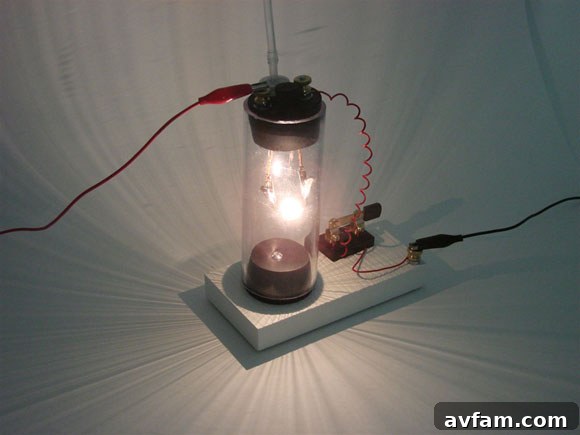
Ignite Your Curiosity: Discover the Science of Light with a DIY Bulb Kit
The world of lighting is constantly evolving. With ongoing discussions about energy efficiency, environmental impact, and government regulations prompting a shift away from traditional incandescent bulbs, many of us might find ourselves wondering about the very essence of light generation. While creating a household-grade, long-lasting light bulb from scratch might seem like a daunting task, the fundamental principles behind this revolutionary invention are surprisingly accessible. What if you could journey back in time and recreate the magic of Edison’s workshop right in your own home?
Imagine the satisfaction of understanding how a simple filament can glow with brilliant light. This curiosity is precisely what a remarkable educational kit aims to satisfy. Far from being just another toy, this kit transforms the complex history of electrical illumination into an engaging, hands-on science project, perfect for aspiring inventors, students, and anyone with a fascination for how things work. It’s an opportunity not just to observe, but to actively participate in the scientific process that illuminated the modern world.
Unveiling the Mystery: How Do Light Bulbs Work?
Before diving into the specifics of building your own, let’s briefly explore the core science. An incandescent light bulb operates on a beautifully simple principle: incandescence. When an electric current passes through a resistant material – the filament – it heats up to such an extreme temperature that it begins to emit light. Think of a blacksmith’s glowing hot metal; it’s the same idea, just scaled down and controlled within a precise environment.
The choice of filament material is crucial. Early experiments used various materials, including carbonized bamboo fibers, before tungsten proved to be superior due to its incredibly high melting point and efficiency. The bulb also needs to be a vacuum or filled with an inert gas (like argon) to prevent the filament from quickly burning out due to oxidation. Without this protective environment, the hot filament would react vigorously with oxygen in the air and rapidly disintegrate, turning into ash rather than radiating light.
The “MAKE” Light Bulb Kit: Your Gateway to Invention and STEM Learning
Stepping into the world of practical science, the “MAKE” Light Bulb Kit offers a unique opportunity to construct a functioning light bulb. This isn’t just about assembling parts; it’s about conducting experiments, understanding historical breakthroughs, and witnessing scientific principles come to life. Designed to ignite the imaginations of experimenters of all ages, from curious children exploring basic electricity to seasoned science enthusiasts recalling fundamental physics, this kit provides a tangible link to the development of one of humanity’s most impactful inventions.
The beauty of this kit lies in its ability to demystify complex scientific concepts through direct engagement. Participants are guided through the recreation of foundational experiments, leading them step-by-step to the creation of their own working light bulb. It’s an immersive experience that goes beyond textbook learning, fostering critical thinking, problem-solving skills, and a deeper appreciation for engineering and innovation. It perfectly aligns with STEM (Science, Technology, Engineering, and Mathematics) educational objectives, making learning both effective and incredibly fun.
What’s Inside the Inventor’s Workshop: Kit Components Explained in Detail
The “MAKE” kit is thoughtfully assembled with all the specialized components required to safely and effectively explore the principles of incandescence. Each item plays a vital role in demonstrating how a light bulb functions, offering a hands-on lesson in electrical engineering and material science:
- Safety Vacuum Chamber: This clear, robust chamber is the heart of your experimental setup. Its primary function is to create a controlled environment where the filament can glow without oxidizing. By removing most of the air, the chamber allows you to observe the incandescence process safely and repeatedly, mimicking the vacuum environment inside commercial light bulbs. This component is essential for a successful demonstration and provides a crucial safety barrier, allowing for repeatable experiments and observations of filament longevity under different conditions.
- Hand Vacuum Pump: Complementing the vacuum chamber, this manual pump allows you to efficiently evacuate air from the chamber. It provides a direct, physical interaction with the scientific principles at play, teaching you firsthand about atmospheric pressure, the properties of a vacuum, and its critical importance in preserving the delicate filament from premature burnout. Operating the pump gives a tactile understanding of scientific instruments.
- Filament Materials (Tungsten and Carbon): The kit includes samples of these critical materials, allowing you to experiment with different types of filaments. Tungsten, known for its incredibly high melting point and efficiency, is the material of choice for modern incandescent bulbs. Carbon, historically used by inventors like Edison in his breakthrough experiments, offers a fascinating glimpse into earlier developmental stages and the challenges faced by pioneers. By testing both, you can directly compare their properties, observe how they react to electrical current, and gain valuable insights into material science and historical engineering choices.
- Test Leads: These insulated wires with alligator clips are your safe and reliable link to supplying electrical power to the filament within the vacuum chamber. They ensure a secure connection to your power source and the filament assembly, allowing for easy experimentation, observation of the filament’s performance, and safe manipulation of the electrical circuit.
- 28-Page Full Color Instruction Manual: More than just a guide, this comprehensive manual is a richly illustrated educational resource. It provides clear, step-by-step instructions that are easy to follow for all age groups, historical context about the invention of the light bulb, detailed scientific explanations of concepts like Ohm’s Law and resistance, and practical troubleshooting tips. The full-color diagrams and engaging text transform the building process into an immersive and understandable learning journey, fostering independent learning and scientific inquiry.
What You’ll Need (But Isn’t Included) for Your Light Bulb Project
To power your homemade light bulb, you’ll need a reliable and safe energy source, chosen to provide optimal results while maintaining safety:
- 2 x 6-volt Alkaline Lantern Batteries: These batteries are specifically recommended for their stable voltage output and sufficient power to bring the included filaments to a glowing state without being excessively powerful or posing safety risks. Using common lantern batteries ensures accessibility and safety for all experimenters, making it easy to get started with your project right out of the box (with a quick trip to the store if you don’t already have them). Always ensure proper battery connection, observe polarity, and handle electrical components responsibly to ensure a safe and successful experiment.
The Experiential Journey: From Concept to Illumination
The process of building your own light bulb with this kit is an incredible educational experience from start to finish. It begins with understanding the setup of the vacuum chamber, carefully positioning your chosen filament material, and securely connecting the test leads. As you use the hand pump to create a vacuum, you’ll physically engage with the concept of air pressure and its critical role in preventing combustion – a direct, tangible lesson in physics.
The moment you connect the batteries and witness the filament come to life, glowing with an ethereal light within the protective chamber, is truly magical. It’s a profound connection to the countless hours of experimentation undertaken by historical figures like Thomas Edison and Joseph Swan. This hands-on process solidifies theoretical knowledge of electrical circuits, resistance, heat transfer, and light emission, making abstract physics concepts tangible, exciting, and deeply memorable. You’re not just reading about science; you’re doing science.
Through this project, you’re not merely assembling parts; you’re actively exploring the scientific method, testing hypotheses about different materials, and observing results. It’s an ideal platform for fostering crucial STEM (Science, Technology, Engineering, and Mathematics) skills, encouraging meticulous attention to detail, and celebrating the enduring spirit of invention that drives human progress and technological advancement. It empowers learners to become active participants in discovery.
Why Recreate a Light Bulb in the 21st Century?
In an age dominated by efficient LEDs and compact fluorescent lights, one might ask why we would bother recreating an incandescent bulb, a technology often considered obsolete. The answer lies in the profound educational value and the deep appreciation it builds for the foundational technologies that shaped our modern world. Understanding the basics is often the key to appreciating complexity.
This kit provides a unique lens through which to view technological advancement. It allows us to understand the simplicity, ingenuity, and elegance of early electrical devices, giving crucial context to the incredible complexity and efficiency of today’s advanced lighting solutions. It’s an ode to the trial-and-error process of scientific discovery, the relentless pursuit of improvement, and the sheer perseverance of inventors. Moreover, it’s an excellent way to introduce fundamental electrical and physics concepts in a safe, engaging, and memorable manner, sparking a lifelong interest in science, engineering, and innovation for future generations.
Whether you’re looking for a compelling home-schooling project, a unique and intellectually stimulating gift for a budding scientist, a captivating classroom demonstration, or simply want to satisfy your own curiosity about how the world works, the “MAKE” Light Bulb Kit offers an unparalleled opportunity to learn by doing. It’s a powerful reminder that even the most commonplace objects often hide fascinating scientific stories and groundbreaking historical efforts that deserve our understanding and appreciation.
See It in Action: A Glimpse into the Bulb-Making Process
While the detailed instructions in the manual will guide you through every step, sometimes seeing is believing. To give you a better idea of how straightforward and engaging this scientific experiment truly is, we’ve included a short video demonstration. This visual aid complements the written instructions, offering a dynamic overview of the assembly process and the thrilling moment when your homemade light bulb springs to life, bringing the theoretical into practical reality.
Watching the video provides an excellent preview of the hands-on experience awaiting you. You’ll observe the simplicity of the setup, the effective function of the hand vacuum pump in creating the essential environment, and the mesmerizing glow of the filament as it operates within the protective chamber. It effectively showcases the kit’s potential to turn a complex scientific principle into an achievable, exciting, and deeply satisfying project for anyone eager to explore the world of light and electricity.
Ready to Ignite Your Own Discovery?
The journey from a simple concept to a glowing filament is more than just a science project; it’s an exploration into the history of innovation, a tangible lesson in fundamental physics, and a testament to the human spirit of inquiry. This kit offers an accessible, safe, and profoundly educational way to understand the very invention that literally lit up the world and paved the way for modern electrical systems and countless subsequent technological advancements.
So, we ask again, could you make your own bulb? With the “MAKE” Light Bulb Kit, the answer is a resounding yes! Unleash your inner inventor, illuminate your understanding of basic scientific principles, and experience the timeless wonder of creating light with your own hands. It’s an adventure waiting to happen, promising not just a working light bulb, but a deeper, brighter understanding of the fascinating scientific and historical foundations of the world around us.