
Embracing the Future: The Enduring Power of Getting Your Hands Dirty
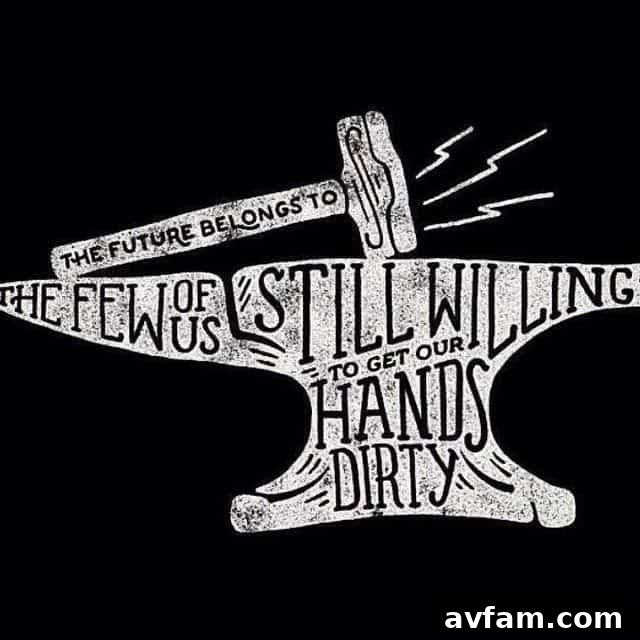
In an increasingly digital and automated world, where algorithms predict our preferences and machines execute complex tasks with remarkable efficiency, there’s a profound truth that often gets overlooked. The foundational human element—the willingness to engage directly, to grapple with challenges, and to apply oneself with genuine effort—remains indispensable. The saying, “The future belongs to the few of us still willing to get our hands dirty,” encapsulates a philosophy that is more relevant now than ever before. This isn’t merely about physical labor; it’s about a mindset that values practical experience, deep understanding, and persistent problem-solving over passive consumption or purely theoretical approaches. It’s a powerful call to action for those who dare to build, to create, and to transform the world with intention and dedicated effort.
What Does “Getting Your Hands Dirty” Truly Signify?
The phrase “getting your hands dirty” extends far beyond its literal interpretation. While it certainly applies to the craftsperson meticulously shaping raw materials, the scientist conducting experiments in a lab, or the engineer troubleshooting a complex system, its essence is profoundly metaphorical. It signifies a readiness to immerse oneself in the nitty-gritty details of a task, to confront complexities head-on, and to learn through direct engagement rather than observation alone. It embodies a commitment to the process, acknowledging that true innovation and lasting impact rarely emerge without strenuous effort, perseverance, and often, discomfort. This mindset means:
- Active Problem-Solving: Moving beyond merely identifying issues to diving deep, understanding root causes, and experimenting with real-world, practical solutions.
- Practical Application: The essential process of translating theoretical knowledge into tangible results, understanding that true mastery and insight come from doing.
- Embracing Effort: Acknowledging that significant achievements and meaningful progress are the direct outcome of sustained, deliberate effort and a willingness to push boundaries.
- Direct Engagement: Being fully present in the process, whether it’s coding software, leading a team, or researching a cure, and not shying away from the intricate and demanding aspects.
- Learning from Failure: Viewing setbacks not as definitive ends, but as invaluable teachers, providing direct, unvarnished feedback that theoretical learning often cannot replicate.
This “hands-on” mindset stands in stark contrast to an era that sometimes glorifies quick fixes, virtual realities, and superficial interactions. It champions depth over breadth, substance over surface, and genuine understanding over fleeting trends. It emphasizes that real-world impact is built on a foundation of direct, informed action.
The Paradox of Progress: Human Ingenuity in the Digital Era
The rapid advancement of technology, artificial intelligence, and automation has led some to believe that human physical and direct effort will inevitably diminish in value. While machines can indeed perform many tasks with greater speed and precision, they inherently lack the unique human capacities for intuition, empathy, nuanced problem-solving, and truly innovative creation. This creates a fascinating paradox: as technology becomes more sophisticated, the distinctly human skills of judgment, ethical decision-making, creative problem-solving, and the willingness to engage directly with complex, unstructured problems become even more crucial and highly valued.
Consider the tech industry itself, often seen as the epitome of digital abstraction. While coding, data analysis, and digital design are fundamental, the most impactful innovations often stem from developers, engineers, and entrepreneurs who understand user pain points by *experiencing* them firsthand, who debug systems by *personally* tracing errors through lines of code, and who build successful companies by *directly* engaging with early customers and fostering a robust internal culture. The grand narratives of technological progress are underpinned by countless individuals who “got their hands dirty” in labs, server rooms, and early startup garages, transforming abstract ideas into concrete, functional realities that shape our daily lives.
Beyond Automation: The Irreplaceable Human Touch
Automation excels at repetitive tasks, data processing, and optimizing existing systems. However, it cannot replicate the nuanced understanding required for genuine innovation or the profound human connection essential for inspirational leadership and effective collaboration. The future will not only demand new technical skills but will also place an increasingly higher premium on timeless human qualities: creativity, critical thinking, adaptability, empathy, and the courage to take initiative. These are attributes primarily honed through direct experience, through the iterative process of trial and error, and through the unwavering resolve to push boundaries – all fundamental facets of “getting your hands dirty.” It’s in these areas that human contribution remains not just valuable, but irreplaceable.
The Invaluable Returns of Practical Engagement and Hands-On Effort
Investing one’s effort and engaging directly with tasks yields a wealth of benefits, both on a personal and professional level. These returns are often intangible but profoundly impactful, shaping individuals, driving innovation, and determining the trajectory of ventures and organizations.
Fostering True Innovation and Resilience
Innovation rarely springs fully formed from pure abstract thought; it is almost always forged in the crucible of practical application. Scientists conduct countless experiments, artists iterate through numerous drafts, and entrepreneurs pivot their strategies based on real-world market feedback. Each step involves hands-on engagement, a continuous learning process that reveals what truly works and what doesn’t in complex, dynamic environments. This iterative process not only leads to the development of novel solutions but also builds extraordinary resilience. When you’ve personally navigated setbacks, overcome obstacles, and found effective solutions through your own direct effort, you develop an invaluable capacity to adapt, persevere, and overcome future challenges. This deep understanding, forged through practical experience, allows individuals and organizations to innovate more effectively and withstand significant disruptions with greater fortitude.
Building Authenticity, Trust, and Mastery
There’s an inherent authenticity and integrity in work performed with direct effort, meticulous attention, and genuine care. Whether it’s a meticulously crafted product, a flawlessly executed service, or a deeply researched and insightful report, the evidence of “hands-on” engagement builds profound trust. Customers, colleagues, and stakeholders can instinctively sense the dedication, deep understanding, and personal investment that went into its creation. Furthermore, consistent practical engagement is the cornerstone of true mastery. It’s through repeated action, continuous refinement, and direct experience that skills are sharpened, intuition is developed, and expertise is solidified far beyond mere theoretical knowledge. This mastery isn’t just about performing a task; it’s about understanding its deepest nuances, anticipating potential issues, and delivering excellence consistently and reliably.
Empowering Leadership and Personal Growth
Leaders who have “gotten their hands dirty” often command greater respect, possess a deeper understanding of the operational realities facing their teams, and are better equipped to navigate complex situations. They can genuinely empathize with challenges, offer practical, informed solutions, and lead with a credibility that comes from firsthand experience rather than abstract directives. For individuals, embracing this philosophy leads to profound personal growth and development. The immense satisfaction of building something from the ground up, solving a complex problem through sheer persistence, or mastering a difficult skill provides a sense of accomplishment and self-efficacy that is deeply fulfilling. It cultivates patience, sharpens problem-solving abilities, and instills a robust work ethic that transcends any single task or career path, equipping individuals for lifelong success.
Cultivating a “Hands-On” Mindset in Any Field
Regardless of your chosen profession, academic pursuit, or personal aspirations, adopting a “hands-on” mindset is a conscious and empowering choice that can be cultivated and strengthened over time. It’s fundamentally about how you approach your work, your learning journey, and your engagement with the world around you.
- Embrace Challenges and Seek Out Opportunities: Actively look for and volunteer for complex problems or tasks that require significant effort and direct involvement. These are often the richest learning experiences that push your boundaries.
- Prioritize Practical Experience: Supplement theoretical learning with internships, apprenticeships, personal passion projects, or volunteer work. There is no genuine substitute for direct application and real-world exposure.
- Learn from Every Failure: View setbacks not as definitive failures, but as invaluable data points and learning opportunities. Analyze what went wrong, adapt your approach with newfound wisdom, and try again. This iterative process is at the very heart of hands-on learning and growth.
- Develop a Deep Understanding: Instead of simply knowing *what* to do, strive relentlessly to understand *why* it works and *how* it’s done at a fundamental, mechanistic level. Deconstruct processes and investigate underlying principles.
- Connect with Mentors and Peers: Seek out individuals who embody this hands-on philosophy in their work and life. Their guidance, insights, and shared experiences can be invaluable in shaping your own approach and development.
- Be a Creator, Not Just a Consumer: Actively participate in creating, building, and contributing. Whether it’s writing code, designing art, building furniture, organizing events, or contributing to a community project, engage in processes that transform abstract ideas into tangible reality.
This hands-on approach isn’t about rejecting intellectual pursuits or academic knowledge; rather, it’s about grounding them firmly in practical reality. It’s about creating a powerful synergy between thought and action, ensuring that ideas are rigorously tested, thoughtfully refined, and ultimately brought to life through dedicated, tangible effort. It builds a bridge between conceptual understanding and real-world impact.
Conclusion: The Future is Built by Doers, Not Just Dreamers
As we gaze into the ever-evolving future, it becomes increasingly clear that the path forward will be forged not just by brilliant ideas and groundbreaking theories, but by the relentless effort, practical dedication, and direct engagement of individuals willing to invest themselves fully. The digital revolution has undeniably transformed our world in profound ways, yet it has also underscored and amplified the irreplaceable value of human ingenuity, resilience, and the unwavering willingness to engage directly with the messy, beautiful, and often challenging process of creation and problem-solving. The future belongs not to those who merely observe, delegate, or passively consume, but to those who step forward, roll up their sleeves, and courageously confront challenges head-on.
The call to “get your hands dirty” is an enduring invitation to embrace a life of purpose, to build meaningful careers, and to contribute genuinely and substantially to the world around us. It is a powerful reminder that true, lasting progress is often the culmination of countless small, deliberate actions, undertaken with unwavering commitment and a spirit of practical excellence. In an age that increasingly seeks authenticity, deep understanding, and tangible impact, the individuals who are prepared to put in the direct effort—to learn from experience, to adapt with agility, to build with intention, and to overcome obstacles with perseverance—will undoubtedly be the ones who not only shape their own destinies but also define the contours of the world to come. Their legacy will be built not just on abstract ideas or fleeting trends, but on the concrete, tangible results of their unyielding dedication and their willingness to truly engage.