
For many families, including ours, the summer months beckon with the irresistible call of the open road. Road trips aren’t just a way to get from point A to B; they’re an integral part of our family’s annual rhythm, creating lasting memories and allowing us to explore new horizons, from spontaneous weekend getaways to meticulously planned week-long adventures. Whether it’s the vibrant energy of San Francisco, the dazzling lights of Las Vegas, or the serene desert landscapes of Tucson, our vehicles are our trusted companions. To ensure these adventures are always smooth and worry-free, our primary goal is to keep our cars in peak condition throughout the year. While routine tasks like oil changes and tire pressure checks are widely known, two often-overlooked yet critically important fluid checks are your brake fluid and window washer fluid. These aren’t just convenience factors; they’re essential for safety and optimal vehicle performance. Ensuring they are at the correct levels and in good condition is paramount, and here’s how you can easily manage these vital maintenance tasks.
The Unsung Heroes of the Road: Why Fluid Checks Matter
Before diving into the specifics, it’s crucial to understand why these fluids hold such importance. Your vehicle is a complex system, and its various fluids act as its lifeblood, enabling everything from smooth braking to clear visibility. Neglecting fluid checks can lead to compromised safety, unexpected breakdowns, and costly repairs down the line. A proactive approach to vehicle maintenance, especially concerning fluids, provides peace of mind and ensures that every mile of your road trip is as enjoyable and safe as possible.
Windshield Washer Fluid: Ensuring Crystal-Clear Visibility
Visibility is non-negotiable when you’re behind the wheel, and your windshield washer fluid plays a pivotal role in maintaining it. Specially formulated to tackle a myriad of obstructions – from road grime and dust to splattered insects and even light ice – a good quality washer fluid ensures your view remains unobstructed in all weather conditions. Prestone, a leader in automotive fluids, offers a versatile range of windshield washer fluids tailored for different needs. They provide solutions like De-Icer for frosty mornings, Bug Wash for battling insect residue, and an All Season 3-in-1 formula for general use.
For our frequent road trips, particularly in the perennially mild climate of Southern California where bugs are a constant presence on the highway, Prestone’s Bug Wash proves to be the most effective choice. It’s specifically designed to cut through stubborn bug guts and road grime, leaving a streak-free finish that significantly enhances driving safety and comfort. Choosing the right type of fluid for your specific climate and driving conditions is a small step that makes a huge difference in real-world driving.
A Perfect DIY Project for Young Enthusiasts
Refilling the windshield washer fluid isn’t just a maintenance task; it’s an excellent opportunity for a hands-on car DIY project that you can genuinely share with your children. Unlike tasks involving hot engine components or hazardous chemicals, washer fluid is generally non-toxic and cool, making it perfectly safe for kids to participate. This task allows them to develop practical skills, understand basic car mechanics, and practice their pouring accuracy by aiming for the “fill line.”
In our family, we’ve entrusted our son with the responsibility of monitoring and refilling the washer fluid reservoir. This simple duty does more than just keep our windshield clean; it instills a sense of ownership and responsibility. He learns that owning a car comes with the important commitment of maintaining it, and that proactive care prevents bigger problems later. While he’s still a bit young for more complex tasks like changing the oil, involving him in these foundational steps builds a strong understanding and appreciation for vehicle maintenance – skills he’ll carry with him as he grows.
Brake Fluid: Your Vehicle’s Most Critical Safety System
While clear visibility is important, arguably the most critical safety system in your vehicle is its brakes. Beyond regularly inspecting brake pads and rotors for wear, paying close attention to your brake fluid is equally paramount. Brake fluid is the hydraulic medium that transfers the force from your foot on the pedal to the brake calipers, ultimately stopping your vehicle. Over time, brake fluid can absorb moisture from the atmosphere, which lowers its boiling point and can lead to “brake fade” – a dangerous reduction in braking efficiency, especially under heavy use or high temperatures. This is why regular inspection and timely replacement are non-negotiable for your safety and the safety of those around you.
Visual Inspection and Replacement: What to Look For
The simplest way to assess your brake fluid’s condition is through a visual inspection. Locate the brake fluid reservoir, usually a translucent plastic container under the hood, often near the driver’s side. Good, healthy brake fluid should appear relatively clear with a slight amber or yellowish tint. If your brake fluid looks dark brown, like a strong cup of coffee or dark caramel, it’s a strong indicator that it has absorbed too much moisture and is contaminated. This is a clear signal that it’s time for a change.
When it comes to replacement, you have a couple of options. The most thorough method is to bleed the entire brake system, which involves replacing all the old fluid with new, pushing it through the brake lines until only fresh fluid remains. This is often best left to experienced DIYers or professional mechanics due to the precision required to avoid introducing air into the system. However, a simpler, more accessible DIY option is to replace the fluid in your master brake cylinder. You can carefully remove the old fluid from the reservoir using an old turkey baster (dedicated solely for this purpose, never for food again!). Once the reservoir is nearly empty, wipe the canister clean with a lint-free cloth, and then fill it with new, appropriate brake fluid to the maximum fill line.
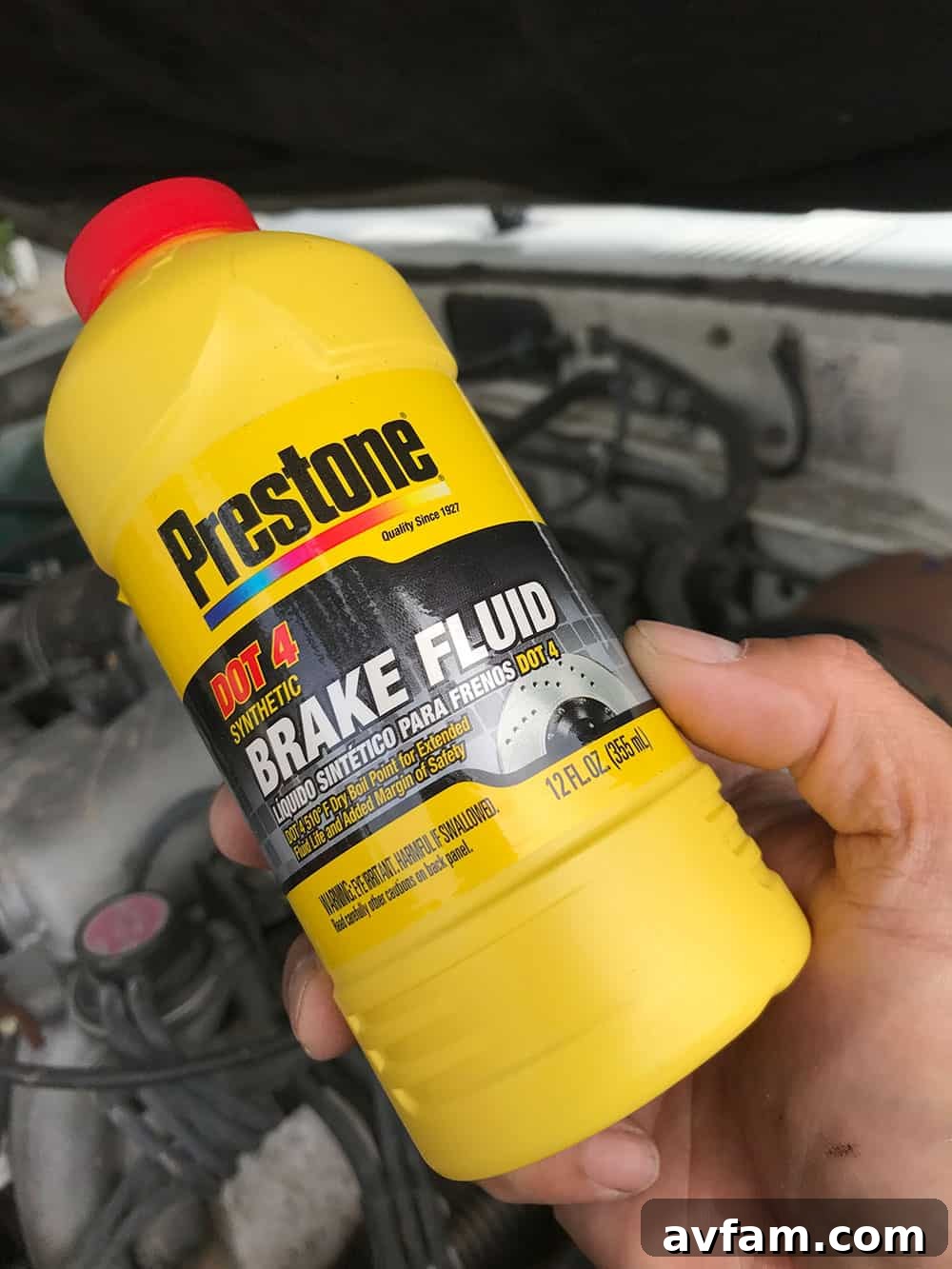
It’s absolutely crucial to consult your vehicle’s owner’s manual to determine the recommended brake fluid change interval and, most importantly, the specific type of brake fluid required. Brake fluids are categorized by DOT ratings (Department of Transportation), such as DOT 3, DOT 4, and DOT 5.1. While DOT 3 and DOT 4 are glycol-ether based and generally compatible with each other (though DOT 4 has a higher boiling point), DOT 5 is silicone-based and incompatible with DOT 3 or DOT 4 systems. Using the wrong type of fluid can cause severe damage to your brake system. Prestone offers a comprehensive range of brake fluids, ensuring you’ll find the exact DOT 3, DOT 4, or DOT 5.1 fluid your vehicle needs.
Safety First: Handling Brake Fluid
Unlike windshield washer fluid, brake fluid is toxic and can be corrosive to your vehicle’s paint. This is emphatically not a project for children. Exercise extreme caution to prevent spills, and if any fluid comes into contact with painted surfaces, wipe it off immediately and rinse thoroughly with water. If you have leftover brake fluid, ensure it’s sealed tightly and disposed of properly according to local hazardous waste regulations. Never pour it down the drain or into the environment.
Beyond Fluids: Comprehensive Road Trip Readiness
While focusing on washer and brake fluids is crucial, remember that they are part of a larger picture of vehicle preparedness. Before embarking on any road trip, consider these additional checks:
- Tire Pressure and Tread: Properly inflated tires improve fuel efficiency and safety. Check tread depth for adequate grip.
- Engine Oil and Filter: Ensure oil is at the correct level and changed according to schedule.
- Coolant/Antifreeze: Critical for regulating engine temperature and preventing overheating or freezing.
- Battery Check: Inspect terminals for corrosion and ensure your battery has enough charge.
- Lights: Verify all headlights, taillights, brake lights, and turn signals are functioning.
- Emergency Kit: Pack essentials like jumper cables, a first-aid kit, a flashlight, basic tools, and roadside assistance information.
Incorporating these checks into your pre-trip routine, alongside fluid maintenance, will significantly enhance your safety and enjoyment on the road.
Making Maintenance a Family Affair: Building Life Skills
Engaging in car maintenance together can be a fantastic way to bond with your kids, transforming mundane tasks into constructive learning experiences. Beyond just filling washer fluid, older children can assist with tasks like checking tire pressure, learning to identify warning lights on the dashboard, or even helping organize the emergency kit. These activities teach valuable life skills, foster independence, and build a foundational understanding of how to care for a complex machine. This hands-on learning contributes not only to vehicle longevity but also to developing responsible and capable young adults.
Conclusion: Drive Confidently with Proper Maintenance
Regular vehicle maintenance is not just about extending the life of your car; it’s fundamentally about ensuring the safety and reliability of your family’s journeys. Simple, routine checks of fluids like windshield washer and brake fluid can prevent major headaches and ensure you’re always prepared for the unexpected. By taking a proactive approach to your vehicle’s health, you gain invaluable peace of mind, allowing you to fully immerse yourselves in the joy and adventure of every road trip.
For all your essential automotive fluid needs, from anti-freeze and triple seal stop leak to the diverse range of de-icers and brake fluids, explore the trusted quality and comprehensive selection offered by Prestone. Their products are designed to keep your vehicle performing optimally, trip after trip.
This is a sponsored post from Prestone, but all opinions and recommendations expressed are 100% from Timothy Dahl of Charles & Hudson, reflecting genuine user experience and insights.